
01
Engineering-Focused Communication
We discuss VCSEL products around wavelength, power, package, beam profile, thermal path, drive conditions and application requirements.
WHY 1ONELASER
1ONELASER helps engineering, R&D, procurement and OEM teams evaluate VCSEL products, compare technical options and move toward suitable custom development paths when standard products are not enough.
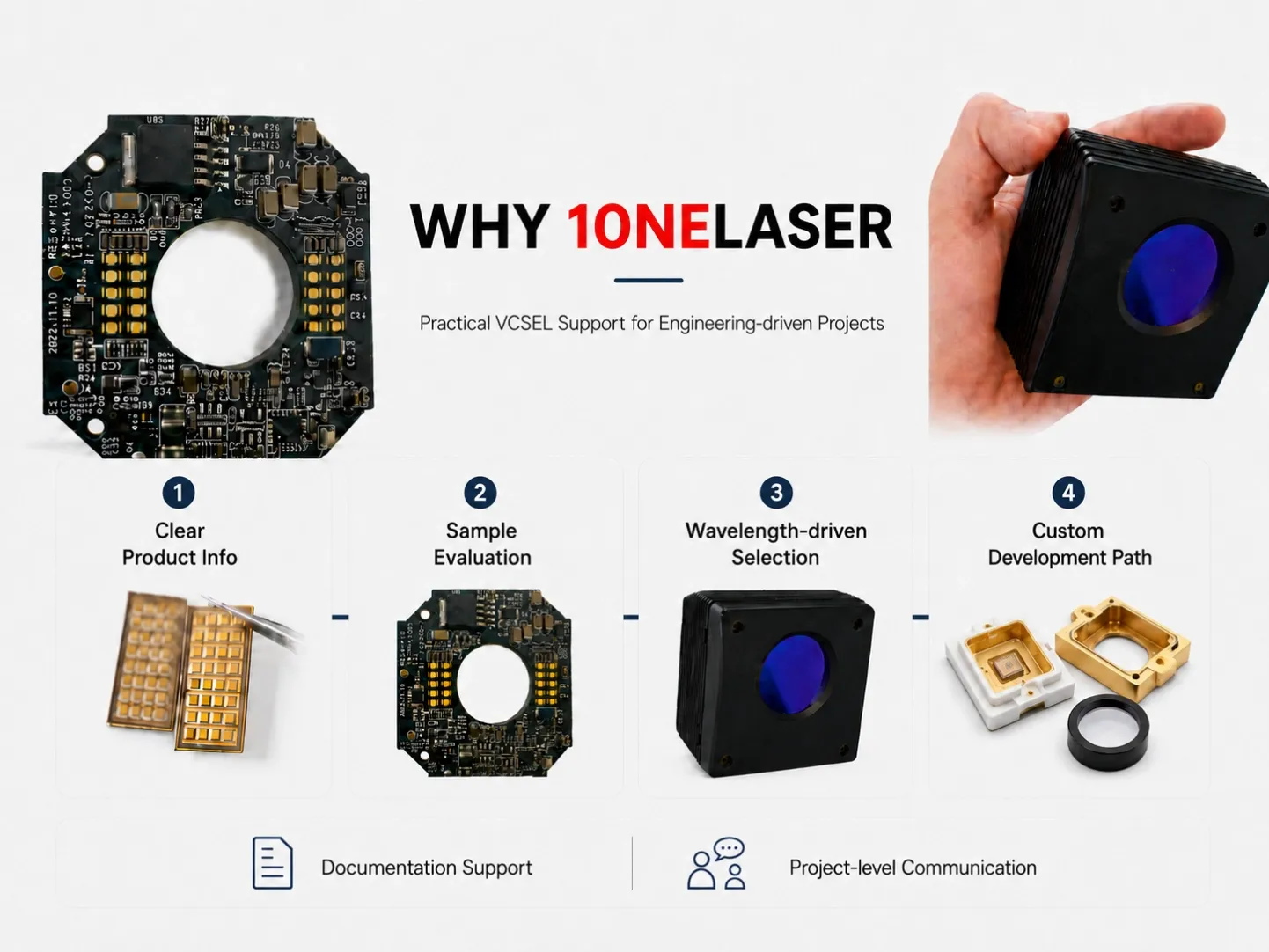
We focus on clear product information, sample-based evaluation, wavelength-driven selection, documentation support and project-level communication before deeper development or integration work.
WHY CHOOSE US
Our support model is designed for customers who need technical clarity, product routing, sample evaluation and realistic development discussion.
We discuss VCSEL products around wavelength, power, package, beam profile, thermal path, drive conditions and application requirements.
Evaluation samples help customers verify optical performance, assembly method and system fit before deeper project commitment.
Products are organized around visible red, NIR, atomic-clock wavelengths, sensing wavelengths and high-power VCSEL directions.
When standard products are not enough, chip-level, package-level, MLA optics, VCSEL array and optical source integration discussions can be reviewed.
Datasheets, compliance files, business verification and project-related documentation can be reviewed where applicable for qualified inquiries.
We support product inquiries, engineering review, supplier replacement, evaluation kits and OEM / ODM communication through one focused platform.
TRUSTED BY GLOBAL CUSTOMERS
1ONELASER supports VCSEL product evaluation, engineering validation, custom projects and academic research programs.








HOW WE WORK
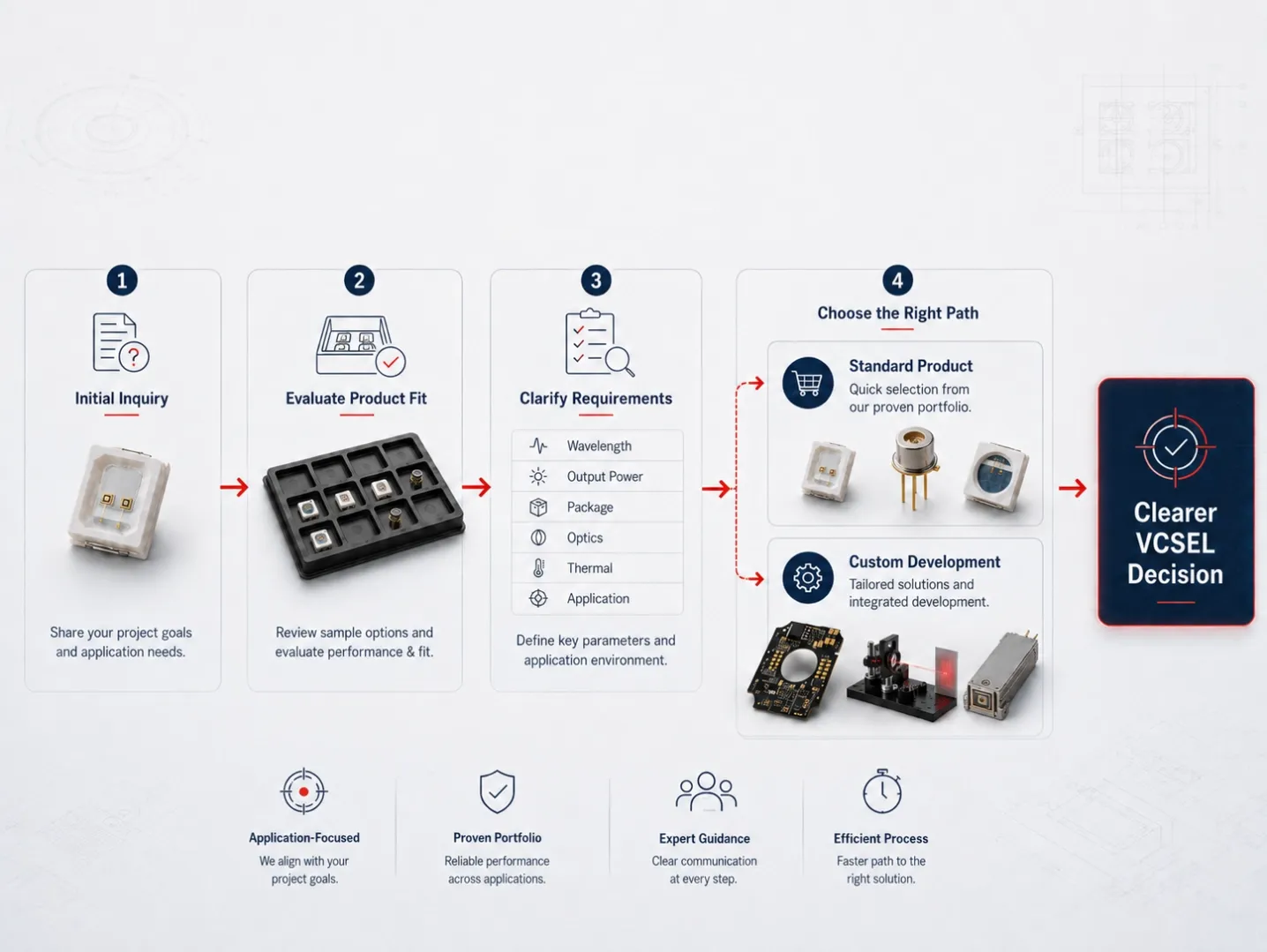
A good VCSEL decision usually requires more than checking a wavelength or output power value. The device should be reviewed together with the package, optical path, thermal design, application environment and project stage.
For standard products, we help confirm product fit, sample availability, datasheet details and evaluation direction. For custom projects, we review the technical requirements first, then discuss the suitable support path.
NEXT STEP
Send us your target wavelength, output power, operation mode, array layout, package preference, collimation or diffuser needs, working distance, spot size and application direction. We will check the suitable wafer-level, package, optical or module path.
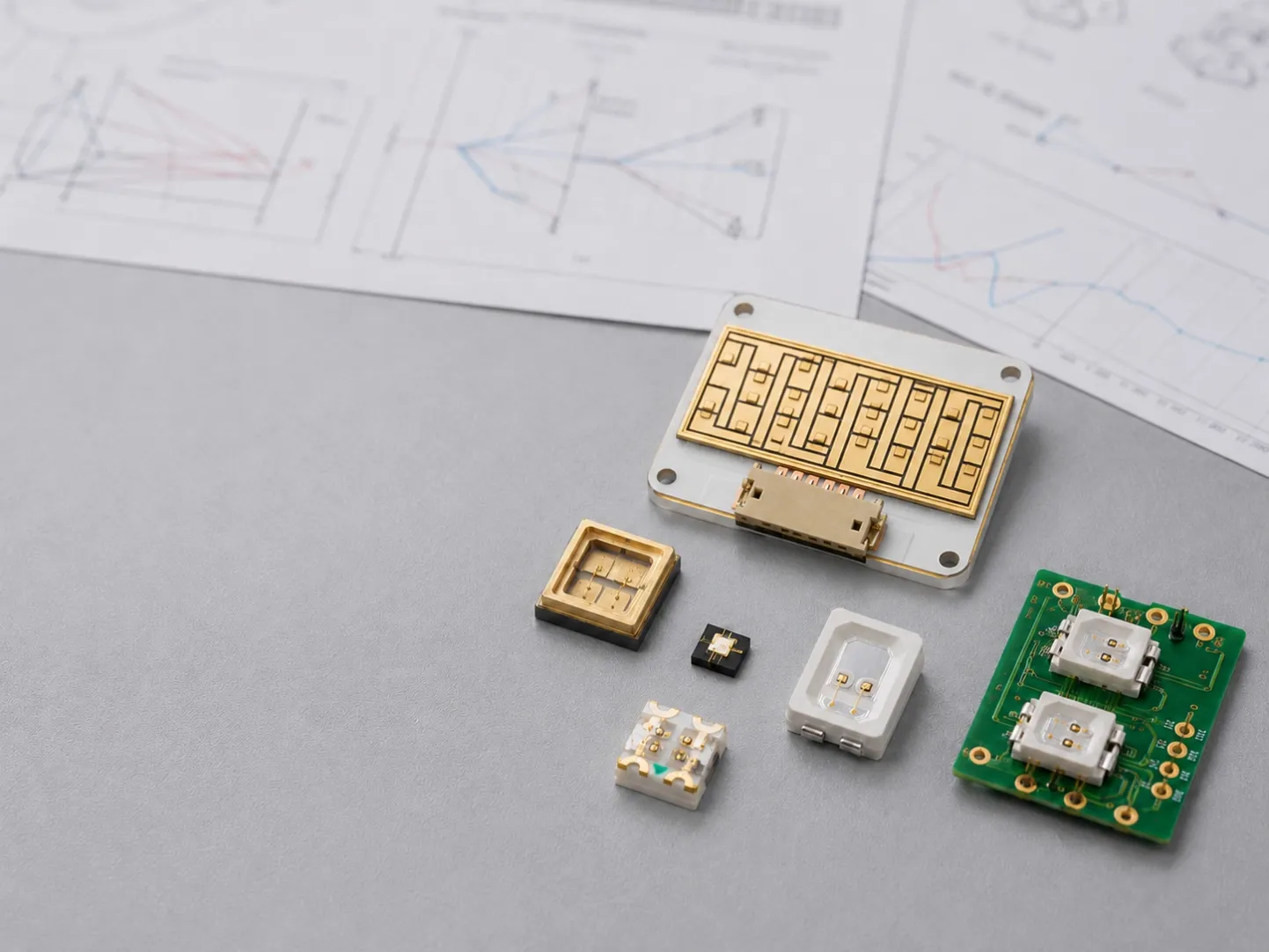
VCSEL Bare Die, SMD Packages & Custom Development