
808nm
808nm VCSEL Solid-Beam Series
808nm 3W and 8W Solid-Beam VCSEL laser chip series for handheld laser hair removal, QCW NIR illumination, machine vision and OEM integration projects.
Specifications
- Product Type
- Solid-Beam VCSEL Laser Chip Series
- Wavelength
- 808nm typ. (800nm – 816nm)
- Optical Output Power
- 3 W and 8.2 W typ. model options
- Emitter Configuration
- 1472 and 5600 emitters
- Operating Mode
- QCW, 0.3 ms pulse width, 1% duty cycle
- Die Size
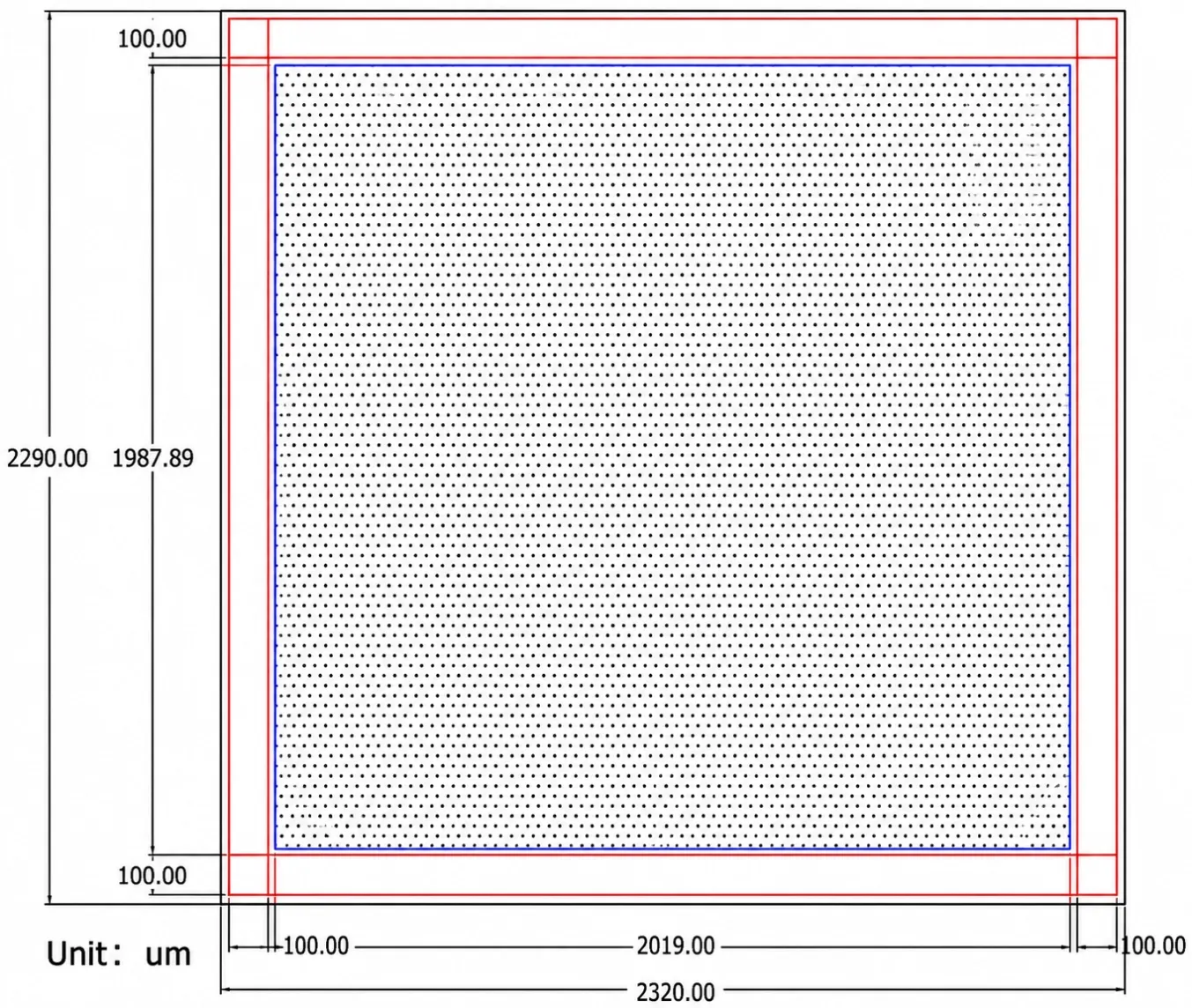
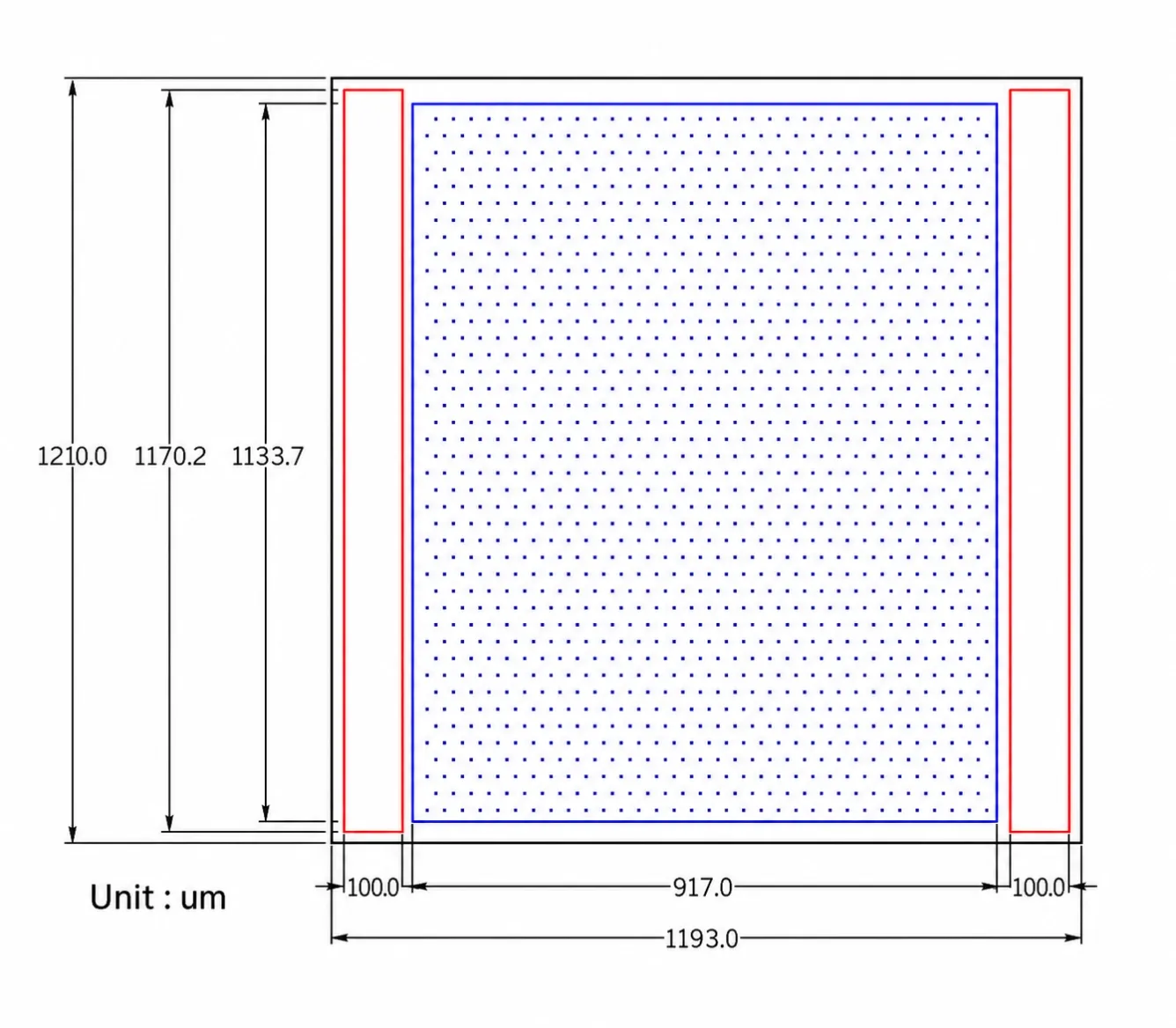
- 1193 × 1210 μm / 2320 × 2290 μm
- Recommended Assembly
- Die attach / wire bonding / ceramic submount / custom packaging
1. 808nm Solid-Beam VCSEL Laser Chip Series for High-Power NIR Integration
The 808nm Solid-Beam VCSEL Laser Chip Series provides 3W and 8W bare-die configurations for OEM teams developing compact high-power near-infrared optical modules. The series combines an 808nm peak wavelength, QCW operation, multi-emitter VCSEL array architecture and a solid, symmetrical far-field profile.
A primary application direction for this series is component-level light-source development for handheld laser hair removal devices. The 3W and 8W configurations allow medical beauty OEM teams to evaluate different optical-output, operating-current, package-size and thermal-integration requirements for compact laser hair removal modules and portable beauty equipment.
For handheld laser hair removal optics, the solid and symmetrical far-field profile provides a significant optical-integration advantage. It gives optical engineers a more continuous usable emission region for downstream collimation and beam shaping, without relying on an emission profile with a pronounced central void. This can support efficient use of the optical aperture, compact handpiece design and more manageable beam-distribution development at module level.
The series also supports component evaluation for infrared illumination, machine vision and other industrial NIR systems. Final model selection must be based on the required optical output, operating current, package area, driver design, heat dissipation and downstream optical architecture.
Lead Time: In-stock products are dispatched within 3 business days; custom-packaged products have a lead time of 15–20 days.
MOQ: The minimum order quantity is 1 reel; selected special models support small-batch orders.
2. 3W and 8W Model Selection
The two configurations share the same 808nm wavelength range and Solid-Beam design direction but address different output, current and package requirements.
Selection Parameter | 3W Configuration | 8W Configuration |
|---|---|---|
Optical Output Power | 3W typical, 2.6W minimum | 8.2W typical, 7.2W minimum |
Typical Operating Current | 3.5A | 10A |
Typical Power Conversion Efficiency | 42% at 50 °C | 40% at 50 °C |
Peak Wavelength | 808nm typical, 800nm – 816nm range | 808nm typical, 800nm – 816nm range |
D86 Full Divergence Angle | 21° typical, 18–24° range | 18° typical, 15–21° range |
Emitter Configuration | 1,472 emitters | 5,600 emitters |
Die Size | 1193 ± 20μm × 1210 ± 20μm | 2320μm × 2290μm |
The documented optical values are measured under QCW test conditions using a 0.3ms pulse width, 1% duty cycle and 50 °C test temperature. Performance in the customer's module depends on packaging, thermal resistance, driver characteristics, optical interfaces and actual operating conditions.
The 3W configuration supports compact handheld laser hair removal modules where smaller die dimensions and lower operating current are important. The 8W configuration is intended for systems requiring a higher optical-output class and capable of supporting the corresponding driver, heat-sink and mechanical-integration requirements.
3. Solid-Beam Design, Packaging and Application Development
Solid-Beam Advantage for Handheld Laser Hair Removal Optics
The solid, symmetrical far-field profile is a key differentiator of this 808nm VCSEL laser chip series. For a handheld laser hair removal device, this beam characteristic can provide a more practical source distribution for downstream collimation, homogenization and treatment-window optical design.
Compared with a far-field pattern containing a pronounced central low-intensity region, a solid emission profile can reduce the optical-design burden associated with filling the central area of the projected beam. This provides medical beauty OEM engineers with greater flexibility when developing a compact optical train, defining the working distance and matching the VCSEL source to the intended aperture or window.
This advantage relates to component-level optical integration. The actual beam distribution, optical power density, power-density uniformity and exposure-control characteristics of the finished handheld laser hair removal device must be confirmed through complete module design, optical simulation, measurement and safety validation.
Packaging and Module Integration
Both products are supplied as VCSEL laser chips for customer-defined die attachment, wire bonding, heat spreading and optical packaging. The package substrate, bonding process, thermal path and optical window must be selected according to the intended operating current and pulse conditions.
The 8W configuration requires greater attention to driver capability, heat dissipation and package dimensions. The 3W configuration provides a smaller die and lower-current option for compact modules. OEM teams developing a handheld laser hair removal module should evaluate the complete handpiece architecture, including the driver, heat sink, optical window, sensor feedback and exposure-control system.
For projects requiring a packaged high-power source or broader module-level development support, review the High-Power NIR Optical Modules solution.
Machine Vision, Infrared Illumination and Industrial Development
The 808nm Solid-Beam VCSEL Series also supports machine vision, infrared illumination and industrial optical-system development where a compact multi-emitter NIR source and controlled far-field distribution are required.
System engineers should evaluate detector sensitivity, working distance, optical filtering, environmental conditions, modulation requirements and permitted exposure levels. For related system-development directions, see the Sensing and Machine Vision solution.
Handheld Laser Hair Removal Device and Medical Beauty Equipment Development
A handheld laser hair removal device is a typical application direction for the 808nm Solid-Beam VCSEL Series. The 3W and 8W configurations give medical beauty OEM teams two component-level options for developing portable hair removal equipment, compact beauty handpieces and integrated 808nm laser hair removal modules.
The 3W 808nm VCSEL laser chip supports projects where a smaller die and lower operating current support compact handpiece development. The 8W Solid-Beam VCSEL is an appropriate option when the optical design requires a higher output level and the system can accommodate the corresponding driver, heat-sink and mechanical requirements.
The solid-beam configuration is especially relevant to this application because it provides a continuous, symmetrical far-field source for downstream optical shaping. This can support compact aperture utilization and beam-distribution development within a handheld laser hair removal module.
These products are component-level optical sources. Their use in a handheld laser hair removal device does not establish hair-removal efficacy, clinical performance, finished-device safety, regulatory approval or certification. The finished-device manufacturer remains responsible for optical safety, thermal safety, exposure control, interlocks, system validation and applicable regulatory requirements.
Related Articles
4. Evaluation Kit and Documentation Support
1ONELASER supports component evaluation with product specifications, optical and electrical test information, packaging discussions and project-specific technical communication. Evaluation planning should identify the selected power configuration, target package structure, pulse conditions, optical requirements, expected working distance and thermal design. An Evaluation Kit with 10 pcs / KIT is available for optical-output verification, driver testing, packaging evaluation, thermal-path review, optical alignment and initial module integration.
Samples & Pilot Production: Evaluation kits, low-volume pilot production, and pre-production validation are supported.
For component-level project evaluation, an Initial Product Report covering the Laser Diode Series and VCSEL Laser Diode Chip Series has been filed with the U.S. FDA CDRH. This filing supports technical documentation and product evaluation.
For applicable products, CE, EMC, EN 60825, LVD, RoHS, REACH and halogen-free certification and compliance documents are available. Documentation depends on the corresponding product model and does not represent certification of the customer's finished device.
5. Frequently Asked Questions
FAQ 1. How should I select between the 3W and 8W 808nm Solid-Beam VCSEL laser chips?
Select the 3W configuration when smaller die dimensions, lower operating current and compact module integration are priorities. Select the 8W configuration when a higher optical-output class is required and the driver, thermal path and package can support the increased current and heat load. The decision should be verified under the intended pulse, temperature and optical conditions.
FAQ 2. What is the advantage of a Solid-Beam VCSEL for a handheld laser hair removal module?
The solid and symmetrical far-field profile provides a more continuous source distribution for downstream collimation and beam shaping. In a handheld laser hair removal module, this can offer a significant optical-integration advantage by helping engineers use the available aperture, develop a compact optical path and manage beam distribution without compensating for a pronounced central void. Finished-module performance still requires optical simulation and measurement.
FAQ 3. Can the 808nm Solid-Beam VCSEL Series support handheld laser hair removal device development?
Yes. Handheld laser hair removal equipment is a typical component-level application direction for the series. The 3W option supports evaluation of compact, lower-current module architectures, while the 8W option supports higher-output designs with appropriate driver and thermal capacity. This application statement does not represent finished-device efficacy, clinical performance, safety certification or regulatory approval.