
415nm+633nm+850nm
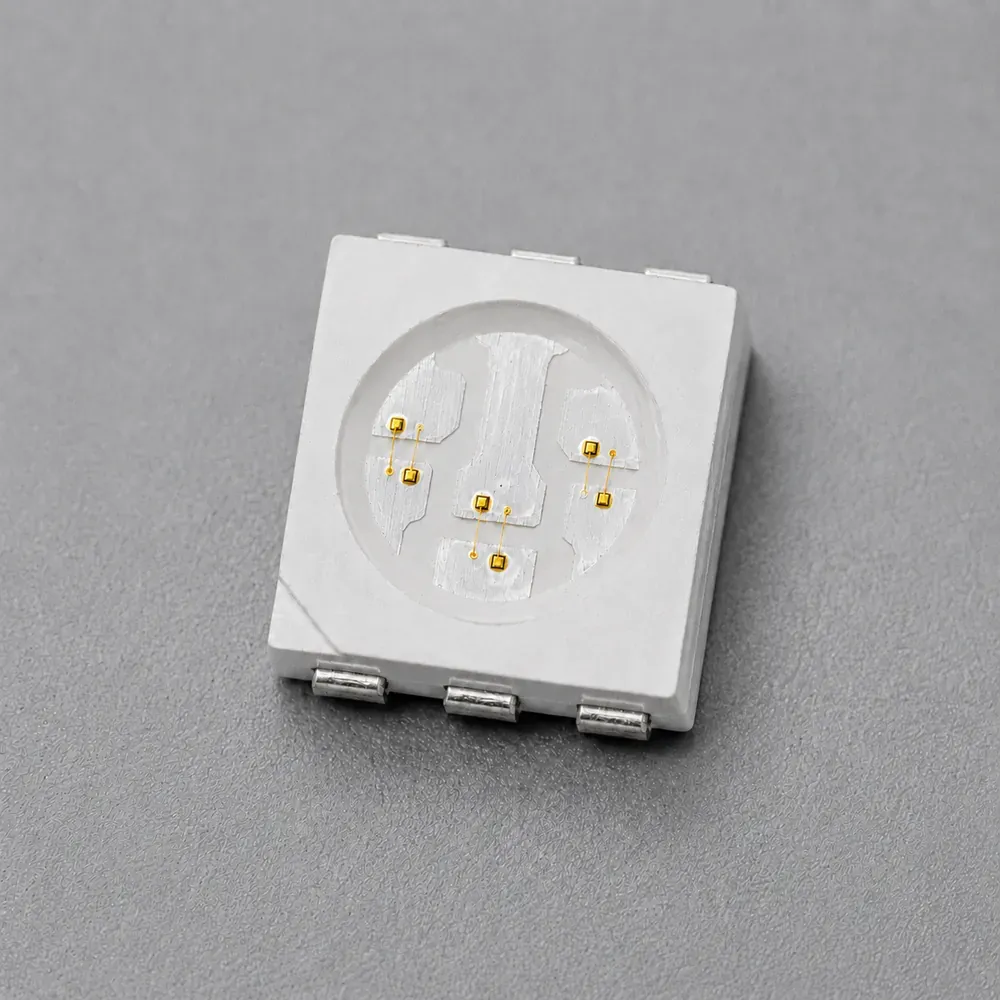
415nm LED / 633nm LED / 850nm VCSEL 5050 SMD
415nm LED, 633nm LED and 850nm VCSEL in one 5050 SMD for three-channel OEM skin-care, phototherapy and multi-wavelength optical-system integration.
Specifications
- Product Type
- LED + VCSEL Multi-Wavelength SMD
- Wavelength Channels
- 415nm LED / 633nm LED / 850nm VCSEL
- Optical Output Power
- 415nm LED: 800–1000mcd at 150mA; 633nm LED: 7000–8000mcd at 150mA; 850nm VCSEL: 7–9mW at 12mA
- Emitter Configuration
- Three separately pinned channels in one 5050 package
- Operating Mode
- Independent continuous-current channels; peak-current pulse limits apply only to the two LED channels
- Optical Emission Profile
- 410nm – 420nm violet LED / 630nm – 635nm red LED / 840nm – 860nm near-infrared VCSEL
- SMD Package Options
- 5050
1. 415nm LED / 633nm LED / 850nm VCSEL 5050 SMD for Three-Channel Optical Integration
This three-wavelength 5050 SMD integrates a 415nm violet LED, a 633nm red LED and an 850nm near-infrared VCSEL in one separately pinned package. At Ta=25 °C, the released source specifies 800–1000mcd for the 415nm LED at 150mA, 7000–8000mcd for the 633nm LED at 150mA, and 7–9mW optical output for the 850nm VCSEL at 12mA.
The component provides three independently driven wavelength channels for compact OEM skin-care, phototherapy and multi-wavelength optical-system integration. It is an optical source component rather than a finished treatment device; the equipment manufacturer is responsible for optical output distribution, thermal design, electrical control, safety, performance validation and finished-device regulatory requirements.
Lead Time: In-stock products are dispatched within 3 business days; custom-packaged products have a lead time of 15–20 days.
MOQ: The minimum order quantity is 1 reel; selected special models support small-batch orders.
Contact 1ONELASER To Discuss 415nm LED / 633nm LED / 850nm VCSEL 5050 SMD Integration Requirements
2. Three-Channel LED and VCSEL Configuration
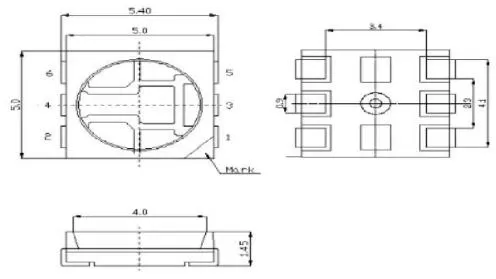
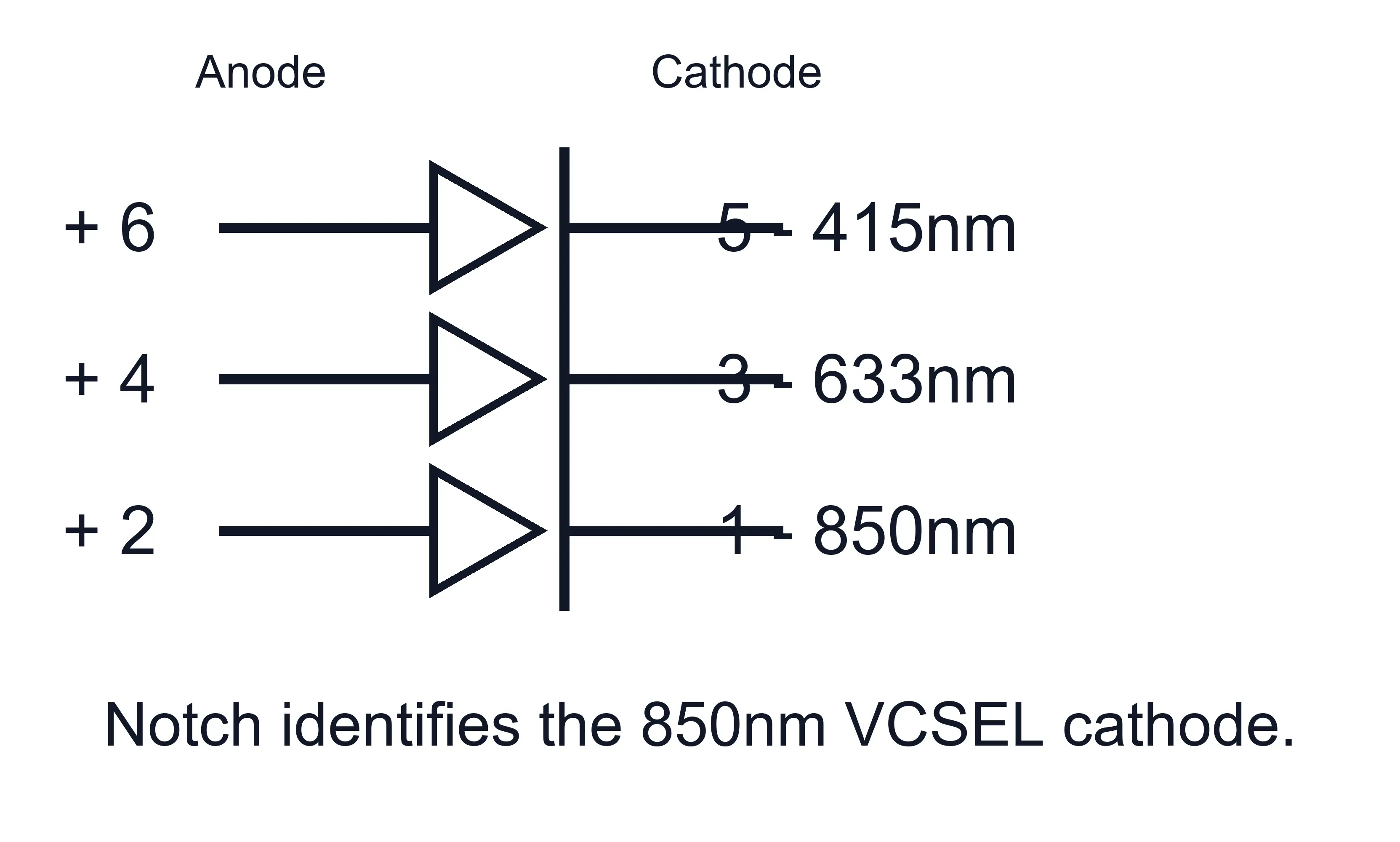
The three emitters use separate electrical pairs. The released pin configuration assigns pins +6 / −5 to the 415nm LED, +4 / −3 to the 633nm LED, and +2 / −1 to the 850nm VCSEL. A package notch identifies the cathode side of the 850nm VCSEL channel.
Channel | Light-Source Type | Electrical Pair | Identification |
|---|---|---|---|
415nm | Violet LED | +6 / −5 | Independent LED channel |
633nm | Red LED | +4 / −3 | Independent LED channel |
850nm | Near-infrared VCSEL | +2 / −1 | Notch at the VCSEL cathode side |
Independent pin pairs provide channel-specific current control and wavelength sequencing within one nominal 5050 footprint. PCB layout, polarity, channel timing and drive circuitry must follow the released package drawing and the electrical limits of each emitter.
3. Optical and Electrical Channel Performance
Each wavelength channel has its own specified output unit, current condition and forward-voltage range. LED luminous intensity in millicandelas is not directly interchangeable with VCSEL optical power in milliwatts.
Channel | Wavelength Range | Specified Output | Forward Voltage |
|---|---|---|---|
415nm LED | 410nm – 420nm | 800–1000mcd at 150mA | 3.2–3.4V |
633nm LED | 630nm – 635nm | 7000–8000mcd at 150mA | 2.0–2.2V |
850nm VCSEL | 840nm – 860nm; 850nm typ. | 7–9mW at 12mA | 1.7–2.2V |
The absolute maximum continuous forward current is 150mA for each LED channel and 20mA for the VCSEL channel. A 200mA peak-current limit is specified only for the two LED channels at a pulse width of 10ms or less and a duty cycle of 1/10 or less; the source does not specify a peak-current rating for the VCSEL channel. The package has a stated thermal resistance of 15 °C/W, a maximum junction temperature of 115 °C, an operating-temperature range of −30 °C to +85 °C, a storage range of −40 °C to +100 °C, and a 2000V HBM ESD rating.
4. OEM Skin-Care and Phototherapy Integration
The combined violet, red and near-infrared channels support compact multi-wavelength light-source architectures for OEM skin-care and phototherapy equipment. Separate channel control supports product-specific wavelength sequencing, current control and optical-path design without requiring three separate SMD packages.
For application-level system planning, review the Medical Beauty & Personal Care Solution. Finished-equipment performance depends on the drive circuit, emitter-to-skin distance, optical distribution, thermal path, operating sequence and system-level validation. The component specification does not represent clinical efficacy, treatment performance, safety approval or regulatory clearance for the customer's finished device.
Related Articles
5. Evaluation Kit and Documentation Support
A 10 pcs / KIT Evaluation Kit is available for channel-drive development, PCB assembly, package integration and wavelength-specific optical testing. The Evaluation Kit supports early hardware work with the released three-channel configuration and does not replace validation of the final optical system or finished equipment.
Samples & Pilot Production: Evaluation kits, low-volume pilot production, and pre-production validation are supported.
For component-level project evaluation, an Initial Product Report covering the Laser Diode Series and VCSEL Laser Diode Chip Series has been filed with the U.S. FDA CDRH. This filing supports technical documentation and product evaluation.
For applicable products, CE, EMC, EN 60825, LVD, RoHS, REACH and halogen-free certification and compliance documents are available. Documentation depends on the corresponding product model and does not represent certification of the customer's finished device.
6. Frequently Asked Questions
FAQ 1. Which Emitters Are Integrated in the 415nm / 633nm / 850nm 5050 SMD?
The package contains a 415nm violet LED, a 633nm red LED and an 850nm near-infrared VCSEL. The three emitters retain independent electrical pairs inside one 5050 package.
FAQ 2. How Are the Three Wavelength Channels Driven?
The 415nm LED uses pins +6 / −5, the 633nm LED uses pins +4 / −3, and the 850nm VCSEL uses pins +2 / −1. The released output data is specified at 150mA for each LED and 12mA for the VCSEL. Absolute maximum ratings are limits rather than recommended operating points, so the final driver design must use engineering-confirmed current, timing and thermal conditions.
FAQ 3. What Must an OEM Validate When Integrating This Three-Wavelength SMD?
The OEM must validate channel current control, optical output distribution, wavelength sequencing, thermal management, PCB and reflow conditions, eye and skin safety, completed-system performance and applicable finished-device regulations. Component-level output specifications do not establish clinical results or finished-device approval.