660nm
530nm LED / 660nm VCSEL / 940nm VCSEL 5050 Hybrid SMD for Reflective PPG Optical Integration
530nm LED / 660nm VCSEL / 940nm VCSEL 5050 hybrid SMD with partitioned emitter cavities for reflective PPG optical integration and custom channels.
Specifications
- Product Type
- LED + VCSEL Hybrid SMD
- Wavelength Channels
- 530nm LED; 660nm VCSEL; 940nm VCSEL
- Optical Output Power
- 530nm: 16-21 lm at 60mA; 660nm: 5-7mW at 10mA; 940nm: 5mW min. / 6mW typ. at 7mA
- Emitter Configuration
- Multi-cavity 5050 package with internal partitions; independent LED and VCSEL channels
- Operating Mode
- Channel-specific source test conditions at Ta=25°C: 60mA (530nm), 10mA (660nm), 7mA (940nm)
- Optical Emission Profile
- 525-530nm (530nm LED); 655-665nm (660nm VCSEL); 930-950nm (940nm VCSEL)
- SMD Package Options
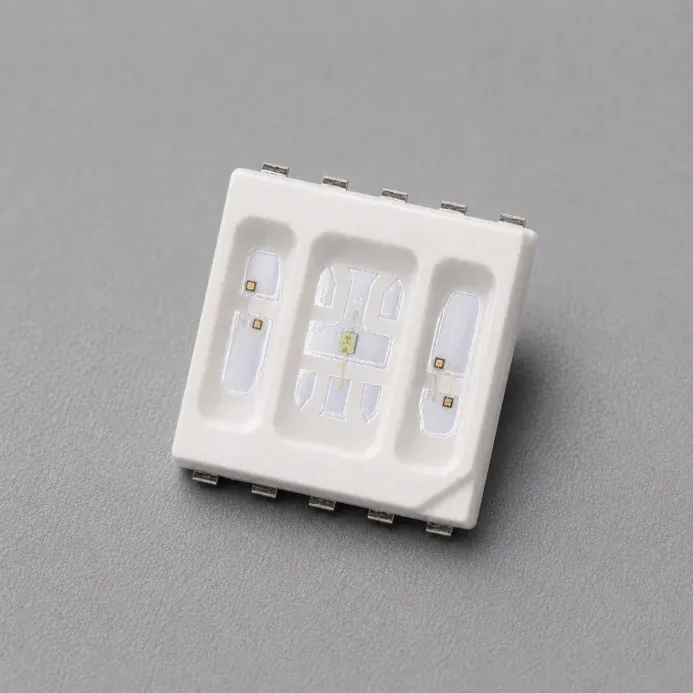
- 5050 copper leadframe with a multi-cavity package and internal partitions
1. 530nm LED / 660nm VCSEL / 940nm VCSEL 5050 Hybrid SMD for Reflective PPG Optical Integration
This 530nm LED / 660nm VCSEL / 940nm VCSEL 5050 hybrid SMD combines three optical channels in one compact multi-cavity package for reflective PPG optical-system evaluation and OEM integration. The released configuration combines a 530nm green LED channel with 660nm and 940nm VCSEL channels, each with its own source-stated electrical and optical test conditions.
The source shows a 5050 copper-leadframe package with internal partitions and separate emitter cavities. This partitioned emitter layout provides a defined physical arrangement for multi-wavelength optical design; final optical coupling, detector response, signal quality, accuracy and regulatory performance must be verified in the completed system.
2. Multi-Wavelength Optical Configuration and Channel Selection
At Ta=25°C, the source specifies 16-21lm for the 530nm LED channel at 60mA, 5-7mW for the 660nm VCSEL channel at 10mA, and 5mW minimum / 6mW typical for the 940nm VCSEL channel at 7mA. These channel values are not interchangeable and should be evaluated against the intended optical stack, detector, current drive and thermal path.
The source-stated emission ranges are 525-530nm for the 530nm LED, 655-665nm for the 660nm VCSEL and 930-950nm for the 940nm VCSEL. Use the three-channel arrangement for application-specific wavelength selection rather than treating the package as a finished PPG sensor or a guaranteed physiological-measurement solution.
3. 5050 Package, Electrical Interface and PCB Integration
The standard package is a 5050 copper leadframe with a multi-cavity configuration and internal partitions. The source identifies independent electrical pairs: pins 8 and 3 for the 530nm LED, pins 6 and 1 for the 660nm VCSEL, and pins 10 and 5 for the 940nm VCSEL. Confirm pad design, polarity, channel sequencing and reflow profile against the released drawing before PCB manufacture.
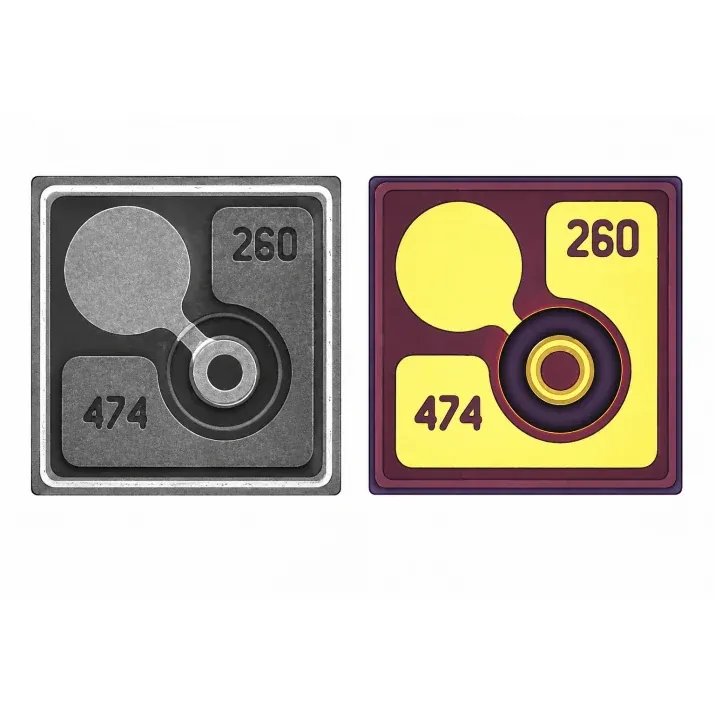
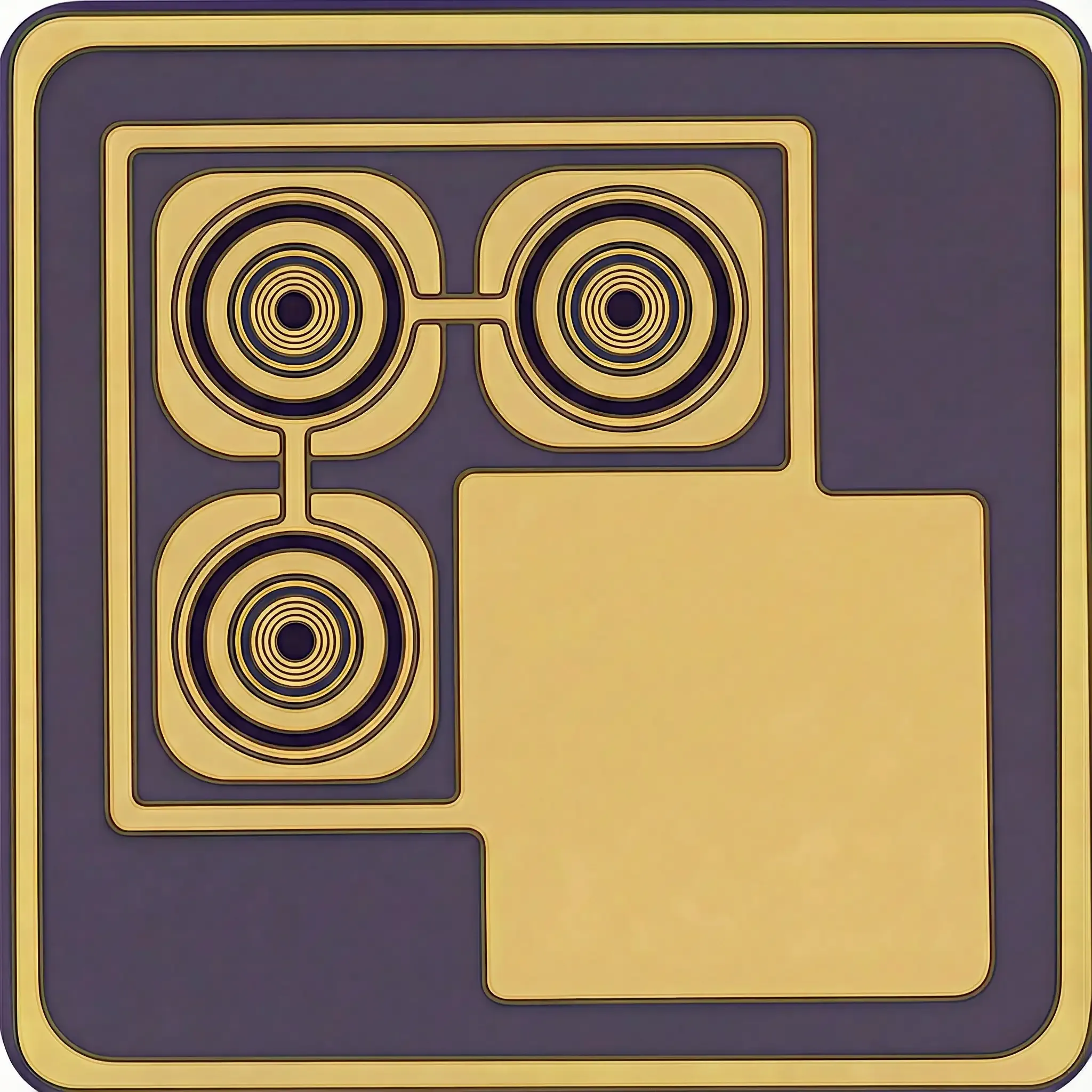
The 660nm and 940nm VCSEL channels use source-documented Zener and gold-wire construction, while the 530nm LED channel uses gold-wire construction. The device must be handled as an electrostatic-sensitive optical component and qualified in the intended assembly, including drive electronics, heat dissipation, optical isolation, detector placement and system-level test conditions.
4. Reflective PPG Optical-System Evaluation and Custom Integration
This hybrid 5050 SMD can be assessed for reflective PPG optical-system development, including compact wearable and ring-form-factor optical architecture. It is a component-level multi-wavelength source, not a finished PPG module: the OEM must validate optical path, photodiode selection, analog front end, algorithms, skin contact, signal performance, safety and final regulatory requirements.
Alongside the standard 530nm LED / 660nm VCSEL / 940nm VCSEL configuration, alternative all-VCSEL wavelength combinations can be assessed for custom 5050 packages, including 660nm / 850nm / 940nm and 660nm / 880nm / 940nm. These are project-specific custom configurations rather than standard product specifications. Channel output, drive conditions, electrical interface, package layout and any photodiode integration are confirmed for each project.
5. Evaluation, Documentation and Custom Development Support
For qualified component-level evaluation, a 10 pcs / KIT sample path can be discussed together with the datasheet, wavelength-channel test conditions and the intended reflective-PPG or custom optical-integration direction. Confirm channel drive, PCB design, detector architecture, thermal conditions and required configuration before selecting a production version.
For component-level project evaluation, an Initial Product Report covering the Laser Diode Series and VCSEL Laser Diode Chip Series has been filed with the U.S. FDA CDRH. This filing supports technical documentation and product evaluation.
For applicable products, CE, EMC, EN 60825, LVD, RoHS, REACH and halogen-free certification and compliance documents are available. Documentation depends on the corresponding product model and does not represent certification of the customer's finished device.
6. Frequently Asked Questions
FAQ 1. How Are the Three Optical Channels Specified for This 5050 Hybrid SMD?
The source specifies the 530nm LED as 16-21lm at 60mA, the 660nm VCSEL as 5-7mW at 10mA, and the 940nm VCSEL as 5mW minimum / 6mW typical at 7mA, with Ta=25°C stated for the optical table. Each channel requires its own drive and system-level validation.
FAQ 2. Do Internal Partitions Alone Guarantee Reflective PPG Signal Quality or Measurement Accuracy?
No. The source establishes a multi-cavity 5050 package with internal partitions and separate channels. PPG signal quality and any measurement accuracy also depend on the completed optical stack, photodiode, analog front end, algorithms, mechanics, operating conditions and validation of the finished system.
FAQ 3. Can Other VCSEL Wavelength Combinations or Photodiode Integration Be Customized?
Yes. Custom 5050 projects can be assessed for all-VCSEL combinations including 660nm / 850nm / 940nm and 660nm / 880nm / 940nm, as well as project-specific photodiode integration. These are not standard product specifications; each project requires confirmation of optical output, electrical interface, package layout and validation plan.