680nm
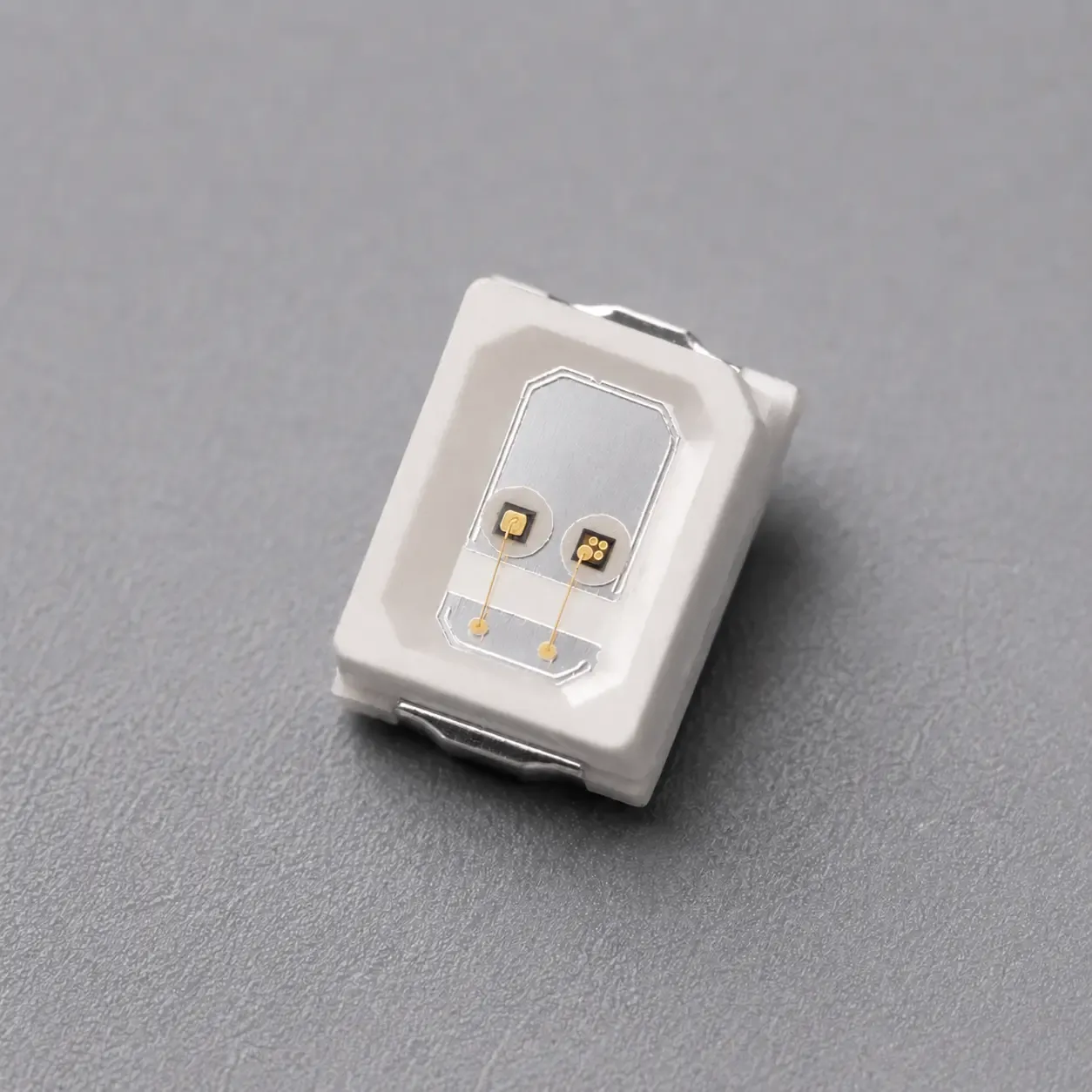
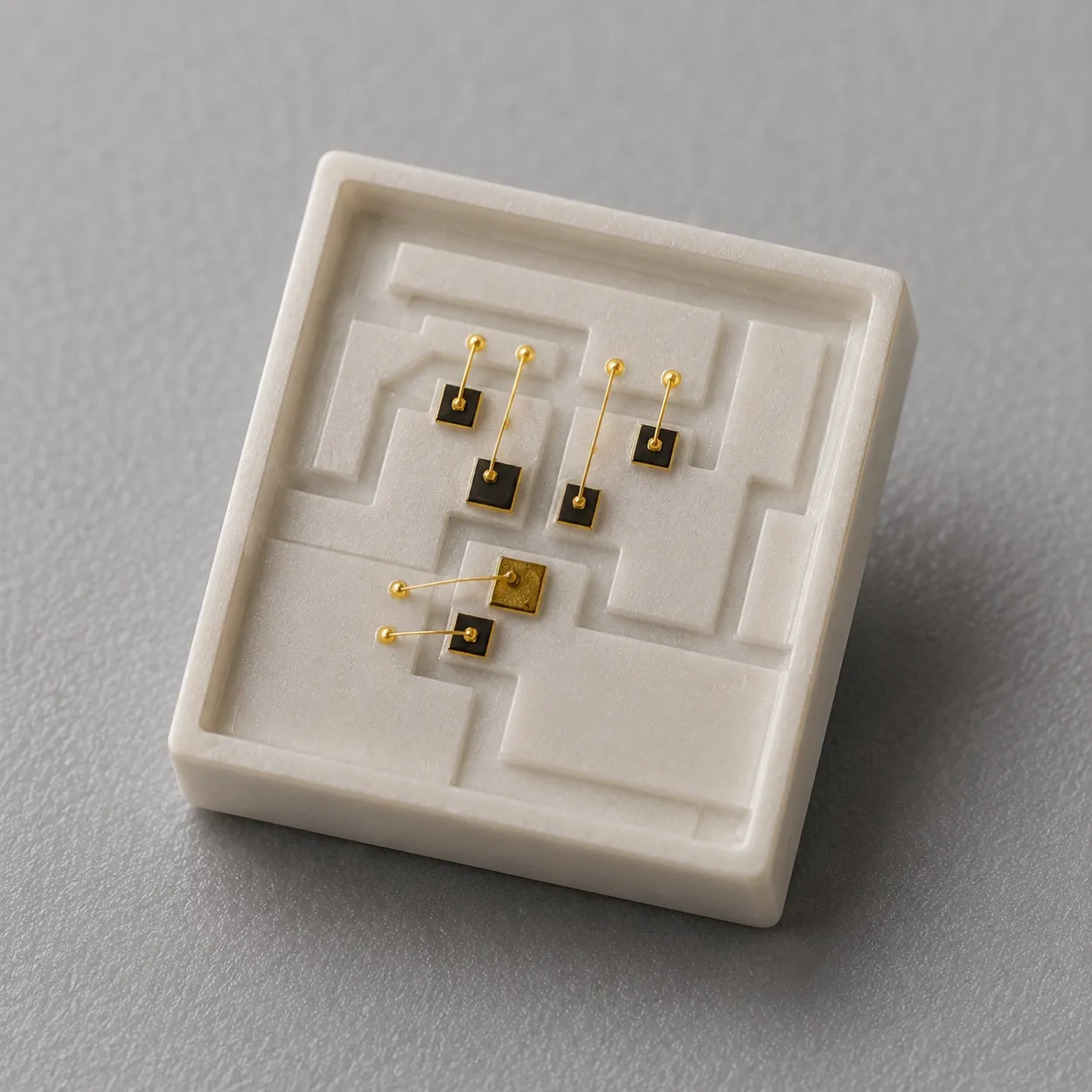
680nm / 850nm / 940nm High-Power Three-Wavelength VCSEL SMD 3535
High-power 680nm / 850nm / 940nm three-wavelength VCSEL SMD in a 3535 package for custom optical-source, driver and thermal-integration evaluation.
Specifications
- Product Type
- High-Power Three-Wavelength VCSEL SMD
- Wavelength Channels
- 680nm, 850nm and 940nm
- Optical Output Power
- 680nm: 50mW typ. at 100mA (30mW min.); 850nm: 115mW typ. at 140mA (100mW min.); 940nm: 36mW typ. at 42mA (30mW min.)
- Emitter Configuration
- Three wavelength channels with separate electrical pins in one 3535 SMD package
- Operating Mode
- Continuous-current characteristics; peak-current condition specified at 160mA, 0.1ms and 1/10 duty
- Optical Emission Profile
- 23° typical beam divergence
- SMD Package Options
- 3535 SMD package
680nm / 850nm / 940nm High-Power Three-Wavelength VCSEL SMD for Custom Optical-System Development
The 680nm / 850nm / 940nm High-Power Three-Wavelength VCSEL SMD 3535 combines a red 680nm channel with 850nm and 940nm infrared channels in a surface-mount package for custom optical-system development. It is intended for engineering teams that need to evaluate channel-specific optical output, driver behavior, PCB integration, thermal path, optical coupling, and system-level exposure conditions together.
The source specifies a 3535 package, separate electrical pins for the three channels, and a 23° typical beam divergence. Its optical outputs are channel-specific and measured at different currents: 680nm is 50mW typical at 100mA, 850nm is 115mW typical at 140mA, and 940nm is 36mW typical at 42mA. These values must not be added together as an unsupported total-output or finished-device rating.
Multi-Wavelength Optical Output and Operating Conditions
The source reports a minimum and typical output for each channel. The 680nm channel is 30mW minimum and 50mW typical at 100mA. The 850nm channel is 100mW minimum and 115mW typical at 140mA. The 940nm channel is 30mW minimum and 36mW typical at 42mA.
The source also specifies continuous forward-current values of 42mA, 100mA and 140mA for the channel conditions, plus a 160mA peak-current condition at 0.1ms and 1/10 duty. The current table must be mapped to the released channel drawing and evaluated with the customer's driver; this page does not convert the conditions into a universal operating mode or total power.
3535 Package, Driver, PCB and Thermal Integration
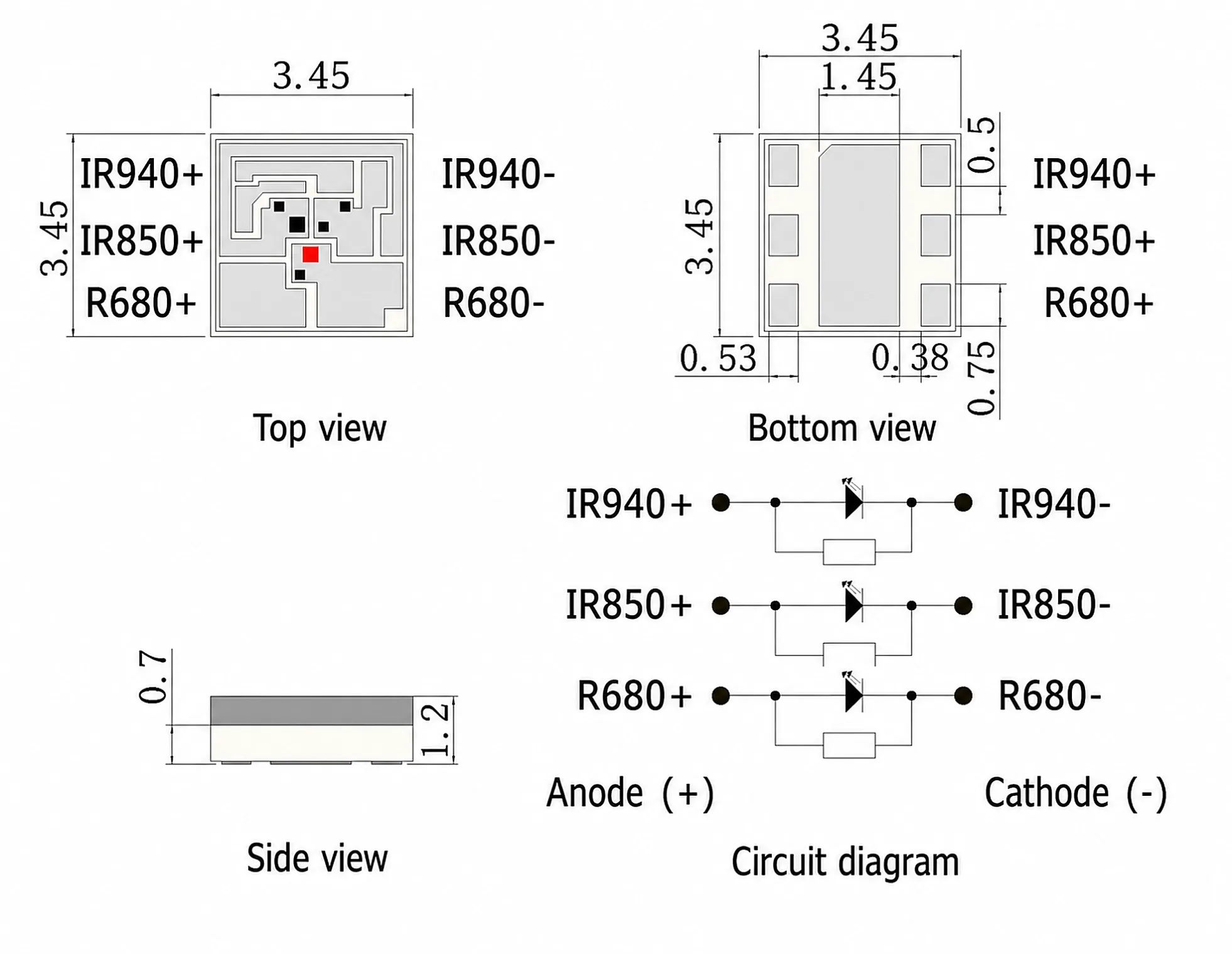
The 3535 package provides separate electrical pins for the 680nm, 850nm and 940nm channels. The source drawing identifies a 3.45mm × 3.45mm package outline and the channel-pin arrangement. Review the released drawing for orientation, pad layout, package clearance, soldering profile, storage, and electrostatic handling.
At the source-specified current levels, the driver, PCB copper, thermal path, enclosure, optical coupling, and measurement setup must be evaluated as one system. Confirm current limiting, duty-cycle control, thermal rise, optical-axis alignment, lens or diffuser interfaces, and assembly repeatability before any production decision. Do not treat the package as a ready-made finished optical or medical device.
System-Level Optical, Safety and Custom Configuration Evaluation
High-power multi-wavelength operation requires system-level evaluation of optical exposure, beam geometry, duty cycle, driver failure modes, thermal conditions, enclosure access, control logic, labeling, and the applicable safety assessment. The component page does not establish a laser class, safe operating distance, medical efficacy, clinical performance, or regulatory approval for a customer's finished system.
The released 680nm / 850nm / 940nm 3535 configuration is the standard specification described by this page. If a project needs another channel set, output condition, driver interface, package layout, thermal route, or integrated optical element, those requirements must be reviewed as a project-specific custom configuration with its own validation plan.
Evaluation, Documentation and Custom Development Support
For component-level evaluation, review the released datasheet together with the customer's driver, PCB, thermal, optical, mechanical, control, and safety requirements. An Evaluation Kit with 10 pcs / KIT is available for checking channel-specific output, current and duty-cycle behavior, package fit, thermal path, optical alignment, and early system-level evaluation.
Before production integration, confirm the applicable electrical limits, continuous and peak-current conditions, soldering profile, ESD handling, optical measurement method, thermal design, exposure assessment, and customer-system documentation against the current technical source. Documentation applies to this component configuration and does not certify the customer's finished device.
Frequently Asked Questions
What are the source-specified output and current conditions?
The 680nm channel is 30mW minimum and 50mW typical at 100mA. The 850nm channel is 100mW minimum and 115mW typical at 140mA. The 940nm channel is 30mW minimum and 36mW typical at 42mA. A separate 160mA peak-current condition is specified at 0.1ms and 1/10 duty.
Can the three channels be controlled independently?
The source drawing identifies separate electrical pins for the 680nm, 850nm and 940nm channels. The customer's driver must still verify channel mapping, current control, duty-cycle behavior, thermal conditions, optical alignment, and system-level safeguards.
Does this component establish a finished-device laser class or medical result?
No. Optical safety classification, exposure limits, medical performance, clinical claims, and regulatory status depend on the complete customer system, including the driver, optics, enclosure, control logic, operating conditions, and applicable assessment.