
680nm
680nm 5/34mW VCSEL SMD Series
680nm 5mW and 34mW peak-output QCW VCSEL SMD series in 2835, 3030 and 5730 packages for scalp PBM, localized red-light and OEM device integration.
Specifications
- Product Type
- VCSEL SMD
- Wavelength
- 680nm typ.
- Optical Output Power
- 5mW / 34mW series
- Transverse Mode
- Multi-mode VCSEL
- Operating Mode
- QCW
- Beam Divergence
- 19°–25° typ.
- SMD Package Options
- 2835 / 3030 / 5730
1. 680nm 5mW / 34mW VCSEL SMD Series for Hair-Growth and Red-Light Device Development
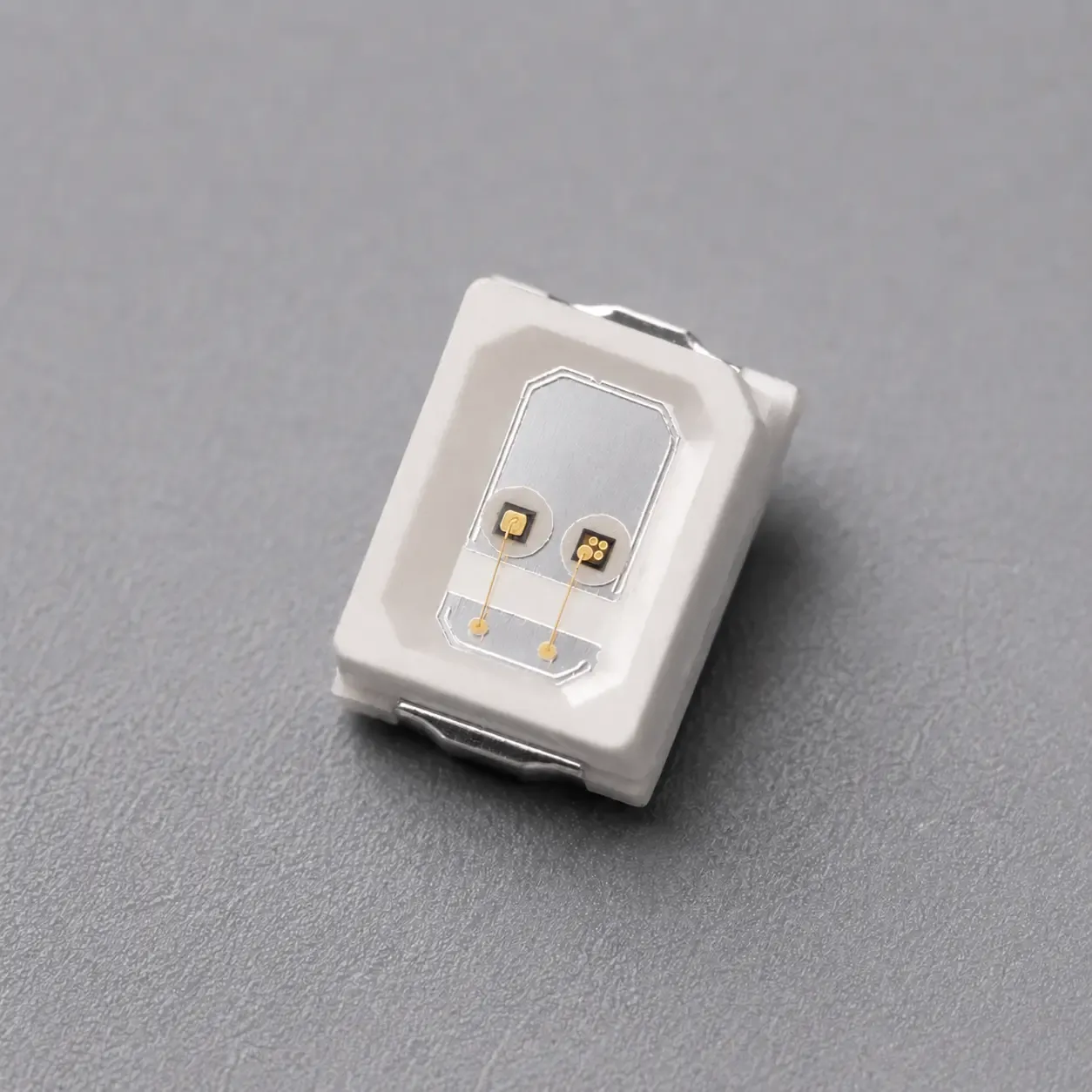
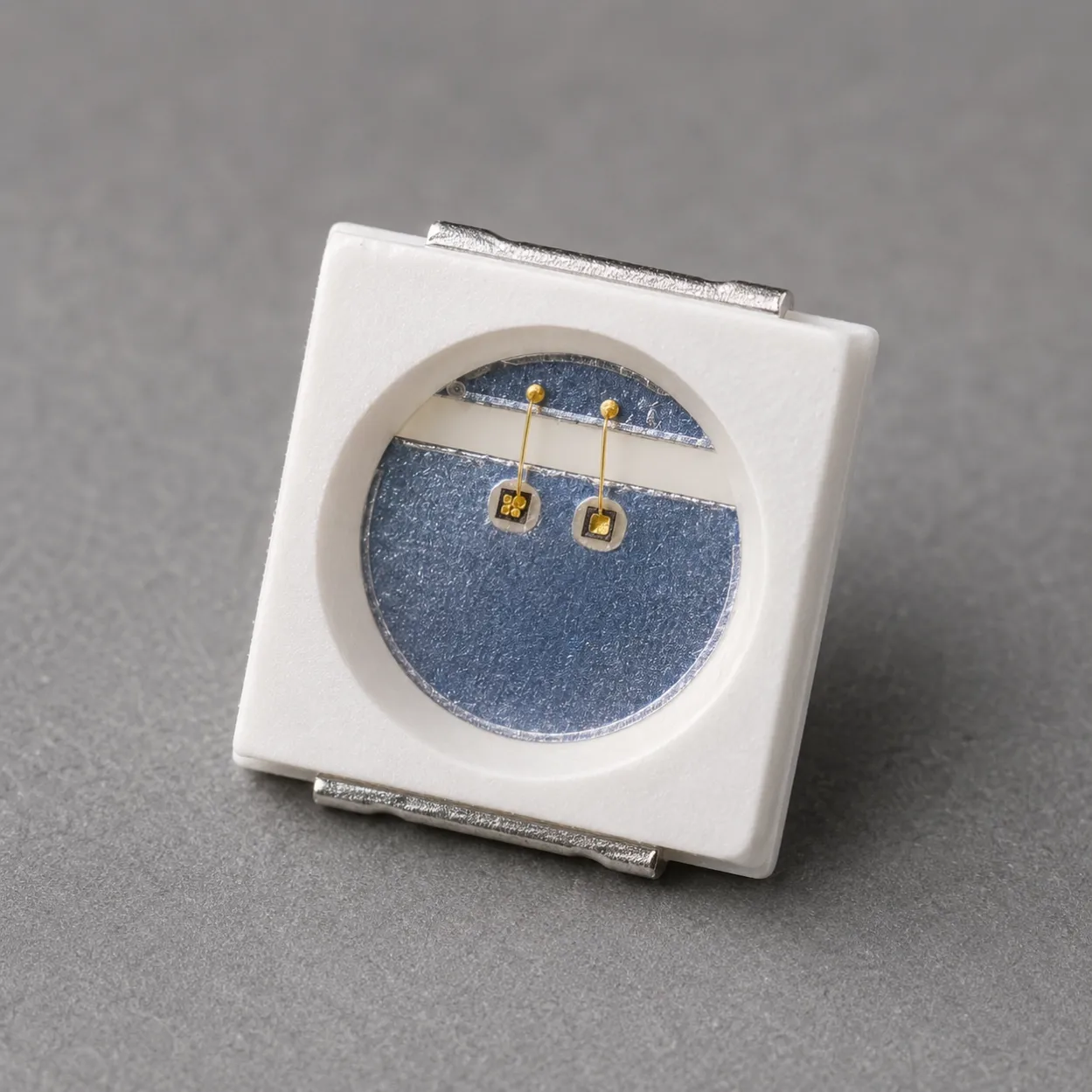
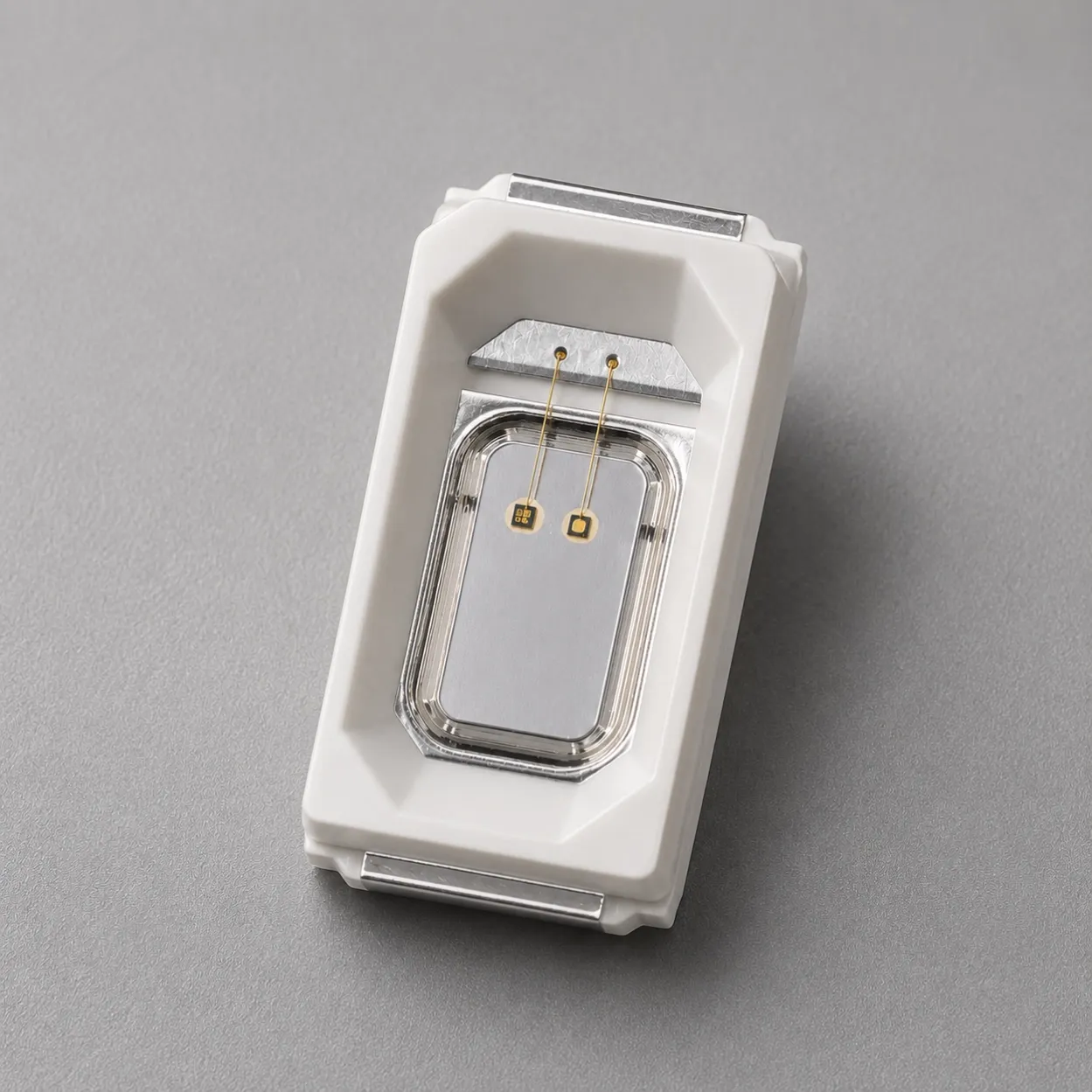
The 680nm VCSEL SMD Series provides three visible-red surface-mount configurations: 5mW in 2835 and 5730 packages, and 34mW in a 3030 package. These discrete options support PCB-level evaluation for hair-growth devices, localized scalp-light systems, photobiomodulation prototypes, personal-care equipment and wavelength-specific optical research.
All three configurations have a typical center wavelength of 680nm, use an 8mil × 8mil multimode VCSEL chip and produce an annular beam profile. They are characterized under QCW conditions at 25 °C with a 0.5ms pulse width and 1% duty cycle.
The 34mW value is typical peak optical output at the specified QCW test point. It is not continuous-wave or average optical power and should not be interpreted as a higher therapeutic dose or improved finished-device performance.
These are component-level products. The application descriptions on this page do not represent medical efficacy, clinical performance or regulatory approval of a finished device.
2. Optical Characteristics and SMD Package Options
The three configurations must be compared using their model-specific test current, wavelength range, package and beam-divergence values.
Optical Output Power | Package | Test Current | Wavelength Range | Beam Divergence |
|---|---|---|---|---|
4mW min. / 5mW typ. / 6mW max. | 2835 | 10mA | 673nm – 687nm | 22° typ. |
5mW typ. / 7mW max. | 5730 | 10mA | 675nm – 685nm | 19° typ. / 23° max. |
34mW typ. | 3030 | 60mA | 670nm – 690nm | 25° typ. |
All three source configurations use QCW operation at 25 °C with a 0.5ms pulse width and 1% duty cycle. The 34mW configuration therefore must not be compared with a CW product or with average optical power without normalizing the operating conditions.
The 2835 and 5730 options provide 5mW-class output for compact multi-point layouts. The 3030 option provides higher peak optical output under the specified QCW condition for localized optical sources and prototypes requiring higher peak power from each emitter position.
Selection should account for package footprint, drive current, emitter count, working distance, annular beam overlap, laser power-density distribution, PCB temperature rise and the thermal behavior of the complete assembly.
3. SMD Package and PCB Integration
The three packages support different PCB footprints and mechanical layouts. Zener protection is included as the default configuration across the listed SMD packages.
2835 Package
The 680nm 5mW 2835 VCSEL SMD supports compact rigid or flexible PCB layouts for scalp-light modules, wearable products and multi-emitter optical assemblies.
5730 Package
The 680nm 5mW 5730 VCSEL SMD provides a larger assembly platform and pad structure. The selected PCB must follow the corresponding pad configuration, polarity and reflow requirements.
3030 Package
The 680nm 34mW 3030 VCSEL SMD provides a compact square footprint for localized red-light systems, optical modules and multi-channel QCW prototypes requiring higher peak output.
All three configurations are ESD-sensitive components. PCB designers must verify current limiting, electrical polarity, package dimensions, solder pads, reflow profile, thermal path and optical alignment using the corresponding datasheet.
Lead Time: In-stock products are dispatched within 3 business days; custom-packaged products have a lead time of 15–20 days.
MOQ: The minimum order quantity is 1 reel; selected special models support small-batch orders.
Bare Die Option for Custom Packaging
Customers requiring chip-level integration instead of a completed SMD package can review the 680nm 5mW VCSEL Bare Die for die attach, gold-wire bonding, ceramic-submount assembly and custom VCSEL packaging.
4. Application Development
The 680nm VCSEL SMD Series supports component-level evaluation for visible-red optical products. Complete-system optical performance, thermal behavior, eye safety and market compliance remain the responsibility of the finished-device developer.
Hair-Growth and Localized Scalp-Light Prototypes
The 5mW 2835 and 5730 configurations support laser caps, hair-growth helmets, laser combs and localized scalp-light prototypes requiring compact PCB integration and flexible emitter placement.
Localized Red-Light PBM Devices
The three configurations can support localized red-light PBM product development where a 680nm component, controlled QCW drive and compact SMD packaging match the optical-system requirements. Wavelength selection must be based on the complete product strategy rather than a therapeutic claim for the component.
Higher-Peak Multi-Point Optical Prototypes
The 34mW 3030 configuration supports pulsed, multi-point optical prototypes requiring higher peak output from each emitter. Drive current, pulse width, duty cycle, emitter spacing, beam overlap and thermal conditions must be validated together.
Biophotonic and Visible-Red Optical Research
The series can also support wavelength-specific biophotonic experiments, visible-red optical testing and laboratory evaluation where 680nm emission is required.
Related Articles
5. Evaluation Kit and Documentation Support
The 680nm VCSEL SMD Evaluation Kit supports 10 pcs / KIT for early-stage comparison of output level, package footprint, PCB assembly and QCW driver conditions.
Samples & Pilot Production: Evaluation kits, low-volume pilot production, and pre-production validation are supported.
- 5mW 2835, 5mW 5730 or 34mW 3030 configuration
- Corresponding product datasheets and package drawings
- International shipping quoted according to destination
- Support for PCB assembly, driving and optical evaluation
- We offer project-specific configuration of center wavelength, wavelength tolerance, optical power bin and package requirements.
For component-level project evaluation, an Initial Product Report covering the Laser Diode Series and VCSEL Laser Diode Chip Series has been filed with the U.S. FDA CDRH. This filing supports technical documentation and product evaluation.
For applicable products, CE, EMC, EN 60825, LVD, RoHS, REACH and halogen-free certification and compliance documents are available. Documentation depends on the corresponding product model and does not represent certification of the customer's finished device.
6. Frequently Asked Questions
FAQ 1. What power and package options are available in the 680nm VCSEL SMD Series?
The series provides three discrete configurations: 5mW typical in a 2835 package, 5mW typical in a 5730 package and 34mW typical in a 3030 package.
All three have a typical center wavelength of 680nm and use QCW operation at 25 °C with a 0.5ms pulse width and 1% duty cycle. Their test currents, wavelength ranges and beam-divergence values differ, so the corresponding datasheet must be used for model selection.
FAQ 2. How should developers select between the 5mW and 34mW 680nm VCSEL SMD options?
The 5mW 2835 and 5730 configurations suit compact multi-point layouts and lower-current PCB designs. The 34mW 3030 configuration provides higher peak optical output at a 60mA test point under the specified QCW condition.
The 34mW value does not represent continuous average power or stronger therapeutic performance. Selection must consider test current, pulse width, duty cycle, emitter quantity, working distance, annular beam overlap, laser power density, PCB thermal capacity and complete-device safety.
FAQ 3. Can the 680nm VCSEL SMD Series be evaluated for hair-growth and scalp PBM devices?
The series serves as a component-level light source for hair-growth helmets, laser caps, laser combs, localized scalp-light systems and scalp PBM prototypes.
Finished-device developers must independently validate driving conditions, emitter quantity, working distance, laser power-density distribution, optical dose, temperature rise, eye safety and laser classification. Supplying the component does not mean the finished device has completed medical-effect validation or regulatory certification.