
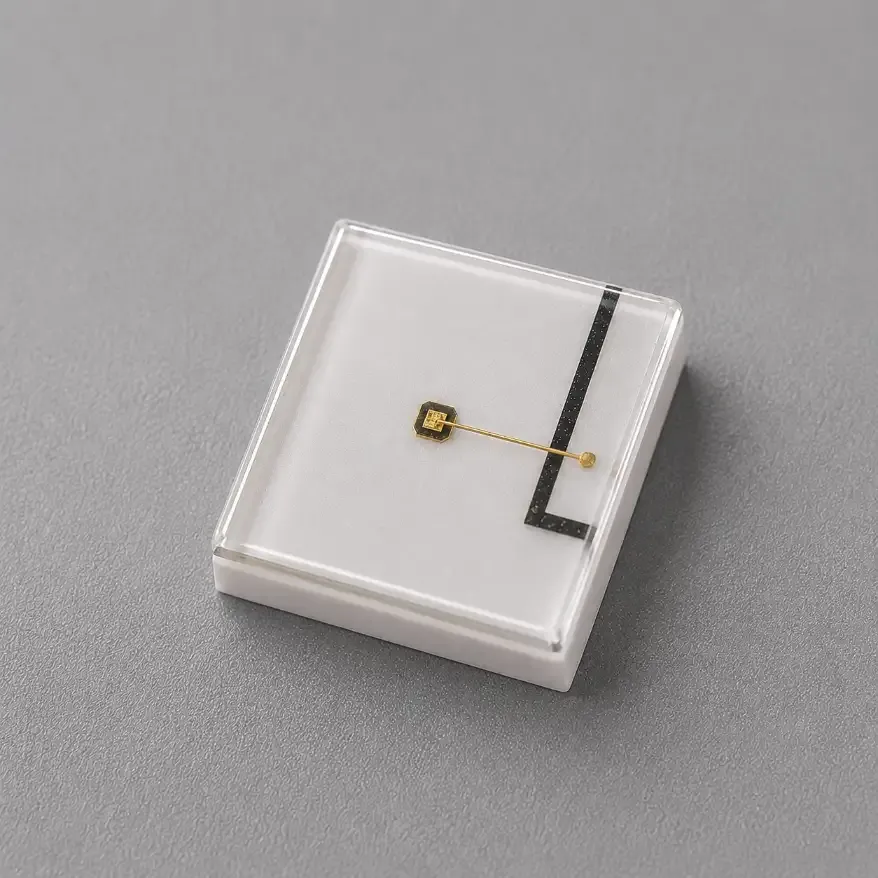
780nm
780nm VCSEL SMD Series
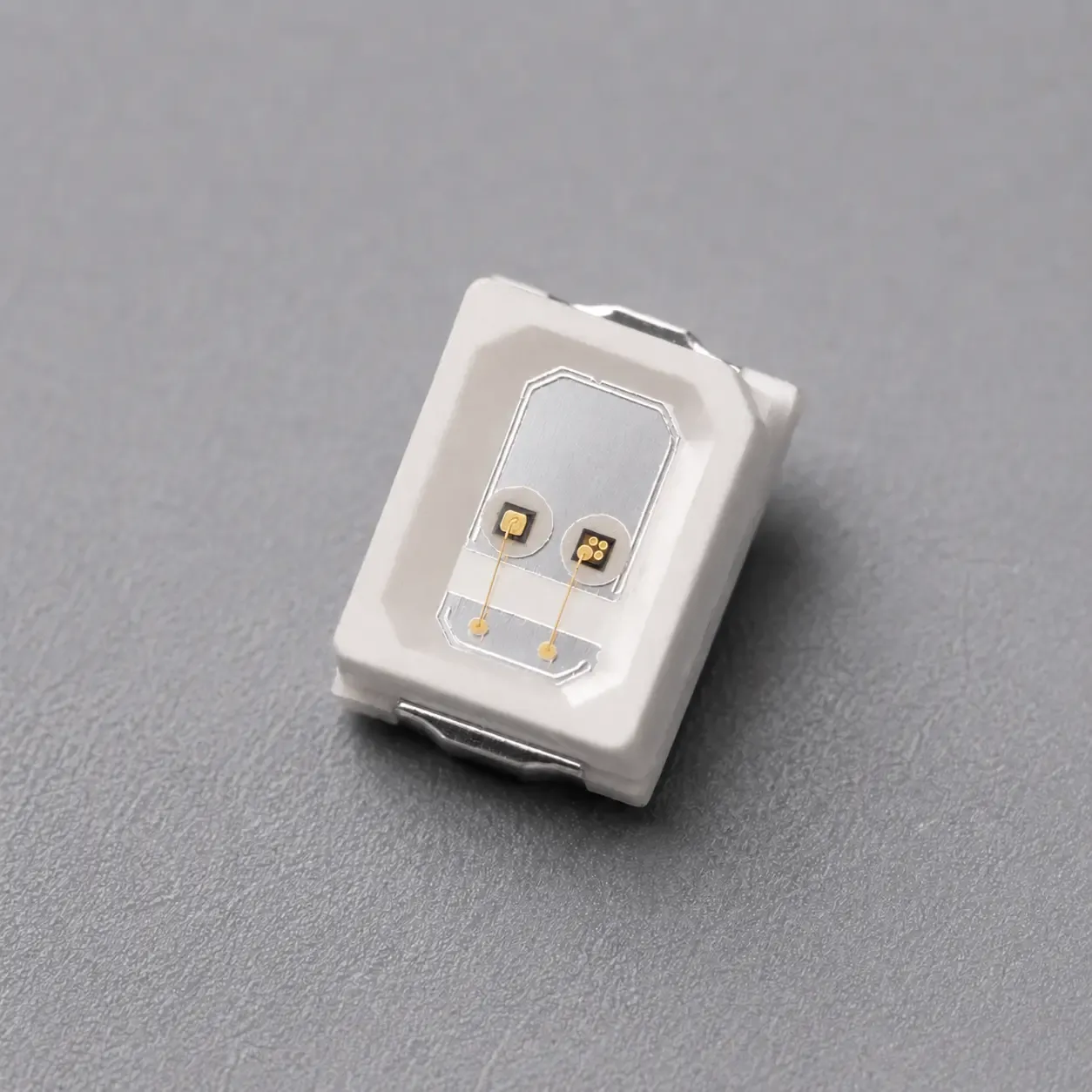
780nm VCSEL SMD Series with 2835 and 2121 package options for PCB integration, compact NIR sensing and technical OEM optical-device development projects.
Specifications
- Product Type
- VCSEL SMD
- Wavelength
- 780nm typ.
- Optical Output Power
- 5mW typ. @ CW 7mA, 50 °C; 10mW typ. @ IF=12mA
- Transverse Mode
- Multi-mode VCSEL
- Operating Mode
- CW
- Beam Divergence
- D86 23° typ. for 5mW 2835; D86 25° typ. for 10mW models
- SMD Package Options
- 2835 / 2121
1. Standard 780nm VCSEL SMD Series
The 780nm VCSEL SMD Series is a near-infrared surface-mount laser diode series designed for direct PCB assembly through standard SMT and reflow-soldering processes.
The series provides 5mW and 10mW output-power classes with 2121, 2835 and 3030 package options. The 5mW version is available in 2835 or 3030 package, while the 10mW version is available in either 2121 or 2835 package.
These 780nm VCSEL devices use a multi-mode surface-emitting structure and operate in CW mode. The series is suitable for compact NIR sensing, PCB-level optical-source integration and OEM optical-device development. It can also be used as an auxiliary NIR wavelength in red + near-infrared multiwavelength products for beauty-device, hair-growth, veterinary PBM and neuro-PBM related device development.
Unlike VCSEL bare die products, this series is supplied as packaged VCSEL SMD components. It is suitable for product designers, PCB engineers, OEM/ODM device teams and optical-module developers who need a ready-to-mount near-infrared VCSEL package.
2. Detailed Optical and Electrical Characteristics
The 780nm VCSEL SMD Series combines low driving current, compact surface-mount construction and three package-size options. Output power, operating current, voltage and divergence angle vary by model. Selection should be based on the PCB design, driving condition, package footprint and target optical performance.
Parameter | Min. | Typ. | Max. | Condition |
|---|---|---|---|---|
Peak Wavelength | 772nm | 780nm | 788nm | According to the corresponding datasheet |
5mW 2835 Output | — | 5mW | — | CW 7mA, 50 °C |
5mW 3030 Output | — | 5mW | — | CW 7mA, 50 °C |
10mW 2121 Output | 8mW | 10mW | — | IF = 12mA, CW |
10mW 2835 Output | 8mW | 10mW | — | IF = 12mA, CW |
Forward Voltage | — | 2.24–2.3V | — | Model dependent |
Beam Divergence | — | D86 23°–25° | — | Model dependent |
Reel Quantity | — | 4000 pcs/reel | — | According to datasheet |
Package | Selection Guide |
|---|---|
2121 | Compact PCB layouts, wearable devices and space-limited optical products |
2835 | Standard SMT production, general PCB-level integration and multi-source board layouts |
3030 | Compact 3.0 × 3.0mm footprint, standard SMT production and compact PCB integration |
The 2121 package is suitable for compact designs with strict PCB-area and product-thickness limits.
The 2835 package is suitable for standard automated placement, general optical-source layouts and designs that require a larger SMD footprint.
The 3030 package option provides a 3.0 × 3.0mm surface-mount footprint with a 0.6mm package height, specified for 5mW typical CW output at 7mA and a 50 °C heat-sink temperature with a 23° typical D86 beam divergence. It is suited to projects that standardize on the 3030 land pattern. See the 780nm 5mW 3030 VCSEL SMD product page for package-level details.
Electrode configuration, dimensional tolerances and reflow-soldering conditions should be confirmed using the corresponding datasheet.
We offer other wavelength, power-bin and package configurations according to the customer’s PCB structure and product-assembly requirements.
Lead Time: In-stock products are dispatched within 3 business days; custom-packaged products have a lead time of 15–20 days.
MOQ: The minimum order quantity is 1 reel; selected special models support small-batch orders.
3. 780nm VCSEL SMD as an Alternative to Conventional TO-can Packages
Compared with conventional 780nm laser diodes in TO-can through-hole packages, the VCSEL SMD format can reduce component height and support automated PCB assembly.
The SMD laser-diode format is compatible with conventional pick-and-place equipment and standard SMT production processes. It can reduce manual insertion, lead handling and hand-soldering steps.
In suitable product designs, 780nm VCSEL SMD can help:
- Reduce the overall height of the laser and PCB assembly
- Simplify PCB layout and mechanical product design
- Support automated placement and batch reflow soldering
- Reduce manual soldering and through-hole insertion steps
- Lower assembly and processing costs
- Improve batch-production consistency
- Support compact multi-source PCB layouts
- Shorten small-batch validation and mass-production preparation
This series can be used as an alternative option for selected projects that are still using conventional 780nm TO-can or leaded laser-diode packages.
Whether it can be directly replaced should be verified against operating current, forward voltage, electrical polarity, optical output power, beam profile, divergence angle, thermal conditions and mechanical structure.
4. 780nm Applications
The 780nm wavelength is within the near-infrared spectrum and can be used as a component-level light source for compact sensing, PCB-level NIR source integration and auxiliary NIR wavelength design in red + near-infrared multiwavelength systems.
Compact NIR Sensing Devices
- Compact optical sensing modules
- Low-power NIR source testing
- PCB-level sensing assemblies
- Short-distance optical detection systems
- OEM optical-device prototypes
Beauty and Personal-Care Devices
- Beauty-mask light-source development
- Handheld beauty-device light-source boards
- Local personal-care devices
- Red + near-infrared multiwavelength product design
- Compact wearable optical products
In beauty and personal-care products, 780nm is more suitable as a near-infrared supplementary wavelength or auxiliary NIR source in a multiwavelength design, rather than replacing the main red-light wavelength.
Hair-Growth and Scalp-Care Devices
- Hair-growth caps
- Hair-growth helmets
- Hair-growth combs
- Hair-growth bands
- Scalp-care device development
- Multi-point NIR source layouts for wearable scalp products
In hair-growth and scalp-care devices, 780nm can be used as an auxiliary NIR wavelength in red + near-infrared combination designs for optical-source layout and multi-point package design.
Veterinary and Animal-Care Devices
- Pet PBM device development
- Canine and feline rehabilitation equipment
- Equine joint, tendon and soft-tissue rehabilitation-device development
- Red + near-infrared multiwavelength veterinary PBM systems
- Large-area optical-source layouts for animal-care equipment
In veterinary PBM or animal-care equipment, 780nm can be used as an auxiliary near-infrared source in multiwavelength systems. Final equipment should still be verified according to optical power density, working distance, thermal design and system safety.
Neuro-PBM and Research Devices
- Neuro-photobiomodulation research equipment
- Red + near-infrared PBM research-device development
- Helmet-type optical-source layouts for research devices
- Wearable optical-source layouts for research systems
- Multiwavelength optical layouts for experimental PBM systems
Neuro-PBM related content refers only to research-device development and component-level light-source selection. It does not indicate that the VCSEL component itself can treat disease or produce a confirmed clinical outcome.
For beauty, hair-growth, veterinary, joint, deeper-tissue or neuro-PBM applications, the complete device may require red and near-infrared wavelength combinations, optical power-density calculation, dose control, working-distance validation and thermal-design verification. Final device performance must be validated by the equipment manufacturer.
Related Articles
5. Evaluation Kit and Documentation Support
The 780nm VCSEL SMD Evaluation Kit supports early-stage verification of package options, PCB layouts and production processes.
The Evaluation Kit includes 10 pcs / KIT per selected model:
Samples & Pilot Production: Evaluation kits, low-volume pilot production, and pre-production validation are supported.
- Selection of the 5mW or 10mW power class according to the project
- Selection of the 2121, 2835 or 3030 SMD package according to the PCB design
- Corresponding product datasheets and package drawings
- International shipping cost confirmed according to the destination
- Support for PCB assembly, driving and optical testing
For component-level project evaluation, an Initial Product Report covering the Laser Diode Series and VCSEL Laser Diode Chip Series has been filed with the U.S. FDA CDRH. This filing supports technical documentation and product evaluation.
For applicable products, CE, EMC, EN 60825, LVD, RoHS, REACH and halogen-free certification and compliance documents are available. Documentation depends on the corresponding product model and does not represent certification of the customer's finished device.
We offer project-specific configuration of the following parameters:
- Center wavelength
- Wavelength tolerance
- Optical output power
- Power-bin selection
- Package dimensions
- PCB assembly and optical layout requirements
6. Frequently Asked Questions
FAQ 1. How should I choose between the 5mW and 10mW 780nm VCSEL SMD options?
The 5mW version is available in a 2835 or 3030 package for lower-power NIR source integration and standard PCB assembly. The 10mW version is suitable when higher single-point output power is required.
The 10mW version can be selected in either 2121 or 2835 package. The 2121 package is suitable for more compact PCB layouts, the 2835 package is suitable for standard SMT production and designs that prefer a larger package footprint, and the 3030 package supports projects that standardize on a 3.0 × 3.0mm footprint.
Final selection should consider target optical output, available PCB area, working distance, operating current, thermal path and required package size.
FAQ 2. Can 780nm VCSEL SMD replace a conventional 780nm TO-can laser diode?
780nm VCSEL SMD can be used as an alternative option for selected TO-can or leaded laser-diode projects, but it should not be assumed to be a direct drop-in replacement.
Replacement review should verify operating current, forward voltage, electrical polarity, optical output power, center wavelength, beam divergence, package dimensions, PCB pad design, reflow-soldering process and thermal path.
FAQ 3. Can 780nm VCSEL SMD be used in beauty, hair-growth, veterinary or neuro-PBM devices?
Yes. 780nm VCSEL SMD can be used as a near-infrared component-level light source for beauty-device development, hair-growth products, veterinary PBM equipment and neuro-PBM research-device development.
In these applications, 780nm is more suitable as an auxiliary NIR wavelength in red + near-infrared multiwavelength designs. The complete system must be validated by the equipment manufacturer according to optical output, dose design, driving condition, working distance, safety design, thermal design and applicable market regulations. The VCSEL component itself does not represent a medical effect or treatment conclusion.