
795nm
795nm Single-mode VCSEL Bare Die for Rb Atomic Clock
795nm single-mode VCSEL bare die for Rb atomic clock and CPT vapor-cell optical-source development, with narrow linewidth and 3.4GHz FM modulation support.
Specifications
- Product Type
- Single-mode VCSEL Bare Die
- Wavelength
- 795nm typ. / 794.5nm – 795.5nm
- Optical Output Power
- 0.13mW typ. @ Ta=70±10 °C, IF=1.6mA, DC=100%
- Operating Mode
- CW / DC=100%
- SMSR / PER
- ≥30dB / ≥15dB
- Spectral Linewidth
- ≤100MHz
- FM Modulation Bandwidth
- ≥3.4GHz
1. 795nm Single-mode VCSEL Bare Die for Rb Atomic Clock
The 795nm Single-mode VCSEL Bare Die is designed for rubidium D1-line optical pumping in Rb vapor-cell atomic clock and CPT rubidium atomic clock systems.
This product is supplied as a bare die for chip-level integration, compact vapor-cell optical modules and atomic-clock optical-source development. It is intended for engineering teams that require a low-current, single-mode 795nm VCSEL source for Rb atomic clock evaluation, precision timing systems and frequency-reference module development.
The device provides a typical 795nm peak wavelength, low-current CW operation, narrow spectral linewidth, defined polarization performance and FM modulation bandwidth support for CPT rubidium atomic clock applications.
Lead Time: In-stock products are dispatched within 3 business days; custom-packaged products have a lead time of 15–20 days.
MOQ: The minimum order quantity is 1 reel; selected special models support small-batch orders.
2. Single-mode Optical Characteristics and Rubidium Vapor-Cell Application
The 795nm wavelength corresponds to rubidium D1-line optical-source development. In an Rb vapor-cell atomic clock system, the VCSEL operating wavelength, temperature setpoint, drive current, modulation condition, polarization state and vapor-cell behavior should be validated together at the system level.
Parameter | Value | Condition |
|---|---|---|
Peak Wavelength | 795nm typ. / 794.5nm – 795.5nm | Ta=70±10 °C, IF=1.6mA, DC=100% |
Optical Output Power | 0.13mW typ. | Ta=70±10 °C, IF=1.6mA, DC=100% |
Threshold Current | 1mA typ. | According to datasheet condition |
Forward Voltage | 1.7V typ. | According to datasheet condition |
SMSR | ≥30dB | Single-mode operation |
PER | ≥15dB | Defined polarization output |
Spectral Linewidth | ≤100MHz | Standard specification |
Beam Divergence | 17° typ. at 1/e² | According to datasheet condition |
FM Modulation Bandwidth | ≥3.4GHz | CPT rubidium atomic clock applications |
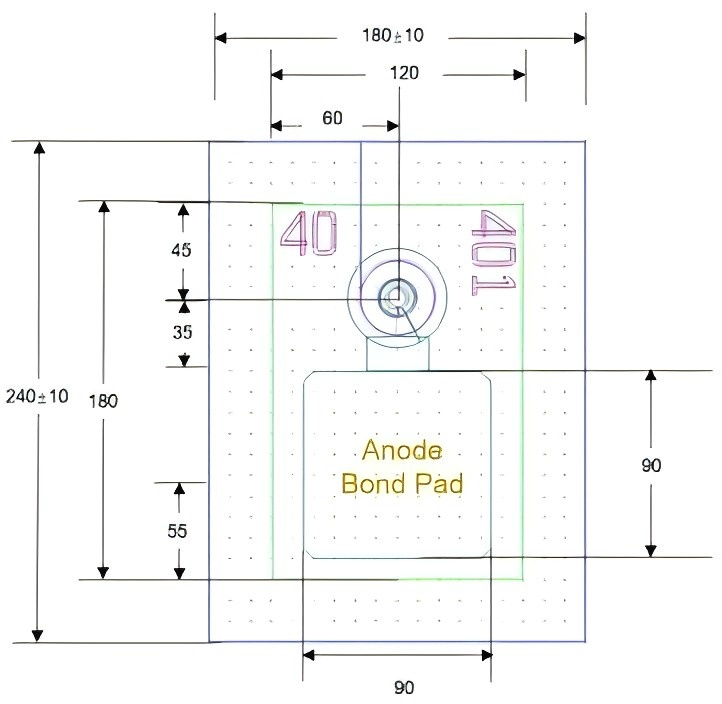
Die Thickness | 150μm | Bare die format |
This product is suitable for:
- Rubidium vapor-cell optical pumping
- Rb D1-line atomic clock evaluation
- CPT rubidium atomic clock development
- Precision timing and frequency-reference systems
- Laboratory optical-source testing for rubidium atomic clock research
- OEM integration for compact vapor-cell atomic clock modules
Final suitability should be verified according to wavelength tuning, temperature stability, linewidth, modulation behavior, optical alignment, vapor-cell condition and the complete customer system design.
3. Package Options for Atomic Clock Development
Bare Die Supply for Chip-Level Integration
The standard supply form for this product page is bare die. Bare die supply is suitable for customers who need chip-level integration, compact module design, direct optical alignment or custom thermal packaging for vapor-cell atomic clock development.
Bare die integration should be handled in an ESD-controlled process. Customers should verify die bonding, wire bonding, thermal path, optical alignment, current control and temperature-control stability in the final system.
Optional TO-can Package Configuration
For projects that require a packaged optical source, optional TO-can package configuration is available as a project-specific configuration.
Optional project configurations may include TO-can packaging, integrated TEC / Peltier, NTC or PT1000 temperature sensing, vacuum-sealed or dry-nitrogen-filled package atmosphere, ceramic submount, collimating lens and application-specific thermal integration.
These options are not the default supply form of this page. Package structure, pin definition, optical geometry, temperature sensor, sealing method and preparation time should be confirmed separately according to the order-specific requirement.
TEC, NTC / PT1000 and Sealing Options
Temperature control is important for rubidium D1-line wavelength matching. For packaged project configurations, TEC / Peltier control and temperature-sensor selection may be reviewed according to the required wavelength setpoint and module structure.
NTC and PT1000 temperature-sensing options, vacuum-sealed packages and dry-nitrogen-filled packages are available for project-specific integration. Final configuration should be confirmed before production.
4. Paid Evaluation Samples and Project Support
Paid evaluation samples are available for early-stage wavelength, linewidth, optical-power, modulation and vapor-cell system validation. The standard evaluation quantity is 5 pcs per set. An Evaluation Kit with 10 pcs / KIT is available for project-specific verification, driver testing, thermal review, optical alignment and initial module integration.
Samples & Pilot Production: Evaluation kits, low-volume pilot production, and pre-production validation are supported.
Evaluation support can help customers verify:
- 795nm wavelength matching
- Rubidium D1-line optical-source behavior
- Optical output power
- Linewidth and single-mode performance
- FM modulation behavior
- Temperature-control requirements
- Bare die integration or package-configuration direction
- Vapor-cell atomic-clock system compatibility
For project-specific wavelength binning, package configuration, TEC integration, temperature sensing or vapor-cell module adaptation, submit the application information and target operating conditions for engineering review.
For applicable products, CE, EMC, EN 60825, LVD, RoHS, REACH and halogen-free certification and compliance documents are available. Documentation depends on the corresponding product model and does not represent certification of the customer's finished device.
For rubidium OPM magnetometer projects, review the related page:
Related Articles
5. Frequently Asked Questions
FAQ 1. Is this 795nm VCSEL designed for rubidium atomic clock applications?
Yes. This 795nm Single-mode VCSEL Bare Die is designed for rubidium D1-line optical pumping, Rb vapor-cell atomic clock evaluation and CPT rubidium atomic clock development.
The device should be validated together with the customer’s vapor cell, temperature-control design, modulation condition, optical alignment and frequency-reference system.
FAQ 2. Is this product supplied as bare die or packaged VCSEL?
This product page refers to bare die supply as the standard form.
Optional TO-can package configuration, TEC / Peltier integration, NTC or PT1000 temperature sensing, vacuum sealing, dry-nitrogen filling, ceramic submounts and collimating lenses are available as project-specific configurations. These package options are not treated as the default configuration of this page.
FAQ 3. Can this 795nm VCSEL be used for OPM magnetometer applications?
This page is focused on rubidium atomic clock and CPT rubidium atomic clock applications.
For rubidium optically pumped magnetometer and vapor-cell magnetic sensing applications, please review the dedicated 795nm Rb OPM VCSEL page. OPM projects may require different optical-power targets, linewidth requirements, package structure and magnetic-environment considerations.